
If you’ve been told you’re allergic to penicillin or another antibiotic, you might be carrying around a label that’s not even true. About 10% of people in the U.S. say they’re allergic to penicillin, but when tested properly, fewer than 1% actually are. That’s not just a small mistake-it affects your health, your wallet, and even the global fight against antibiotic resistance. The good news? There’s a safe, reliable way to find out if you’re truly allergic, and preparing for it is simpler than you think.
Why This Test Matters
Most people who think they’re allergic to penicillin had a reaction as a child-maybe a rash, nausea, or a fever-and were told to avoid it forever. But reactions like these often aren’t true allergies. A true antibiotic allergy means your immune system overreacts to the drug, which can cause hives, swelling, trouble breathing, or even anaphylaxis. But many rashes are viral, not drug-related. And nausea? That’s a common side effect, not an allergy. The problem is, if you’re labeled allergic, doctors avoid penicillin and reach for stronger, more expensive antibiotics. These alternatives cost up to $6,000 more per year and increase your risk of dangerous infections like C. diff. They also fuel antibiotic resistance, making future infections harder to treat. Testing isn’t just about avoiding discomfort-it’s about getting the right treatment, saving money, and helping public health.What You Need to Stop Taking Before the Test
The most important step in preparing for an antibiotic allergy test is stopping certain medications. If you don’t, the test might show a false negative-meaning you could be told you’re not allergic when you actually are. Stop all first-generation antihistamines like diphenhydramine (Benadryl) and hydroxyzine at least 72 hours before your appointment. These drugs are common in sleep aids, cold medicines, and allergy pills. Even one dose can mess up your results. Stop second-generation antihistamines like loratadine (Claritin), cetirizine (Zyrtec), fexofenadine (Allegra), and levocetirizine (Xyzal) for a full 7 days. These are often marketed as “non-drowsy,” but they still block the histamine response the test needs to detect. Stop tricyclic antidepressants like doxepin. These have strong antihistamine effects and must be discontinued 14 days before testing. Don’t stop these on your own-talk to your doctor first. They’ll help you switch safely if needed. Keep taking your essential meds, like blood pressure pills, thyroid medicine, or insulin. But tell your allergist about everything you take. Some drugs, like ACE inhibitors (used for high blood pressure), can make an allergic reaction harder to treat if one happens. Beta-blockers can hide early warning signs of anaphylaxis, so your provider will monitor you extra closely if you’re on them.What Happens During the Test
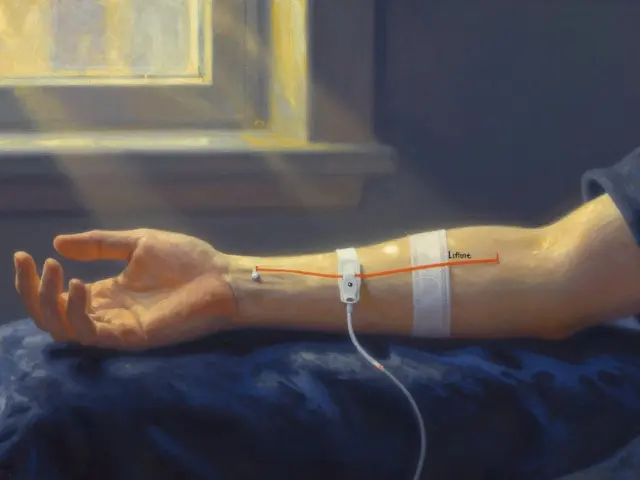
Allergy testing for antibiotics follows a clear, step-by-step process designed to be safe and accurate. It’s usually done in an allergist’s office or hospital setting where emergency equipment is right there. Step 1: Skin Prick Test-A tiny drop of penicillin solution is placed on your skin, then the surface is gently pricked with a plastic device. It doesn’t hurt-most people say it feels like a light mosquito bite. If you’re allergic, a red, itchy bump will show up within 15 to 20 minutes. This test has less than a 0.01% chance of causing a serious reaction. Step 2: Intradermal Test-If the skin prick is negative, the allergist will inject a tiny amount of penicillin under the skin with a fine needle. This creates a small bubble (bleb) on your arm. Again, they’ll watch for redness or swelling larger than 3mm. This step is more sensitive than the skin prick and catches more true allergies. Step 3: Oral Challenge-If both skin tests are negative, you’ll be given a small dose of the antibiotic by mouth-usually 10% of a regular dose. You’ll be monitored for 30 minutes. If nothing happens, you’ll get the full dose and watched for another 60 minutes. This is the final step to confirm you can safely take the drug. The chance of a mild reaction during the oral challenge is about 10%. A severe reaction like anaphylaxis is extremely rare-only 0.06%. That’s less than 1 in 1,000. Emergency meds like epinephrine, albuterol, and antihistamines are always on hand.
What a Positive or Negative Result Means
A positive skin test-meaning a raised, red, itchy bump over 3mm-means you likely have a true allergy. You’ll be advised to avoid that antibiotic and carry an epinephrine auto-injector if needed. A negative result means you’re not allergic. You can safely take penicillin or related drugs like amoxicillin. This is life-changing for many people. One patient in Toronto switched from a $1,850 daily antibiotic to penicillin at $12 per dose after testing. Her annual cost dropped from $67,525 to just $4,380. But not every reaction counts. If you feel itchy or get a rash after the oral challenge but don’t have swelling, breathing issues, or low blood pressure, it’s often not a true allergy. About 5-7% of people have these “false positives” during testing. Your allergist will interpret the results based on your full history.What to Expect After the Test
Most people feel fine right after the test. But some notice mild side effects:- Itching or redness at the skin test site-this usually lasts 2-4 hours and can be treated with over-the-counter hydrocortisone cream.
- Delayed reactions-some people develop a rash 4 to 8 hours after testing. This happens in about 15% of cases and is rarely serious.
What If You Were Allergic as a Kid?
Allergies can fade over time. About half of people who had a severe reaction to penicillin as a child lose their allergy within 5 years. By 10 years, 80% no longer react. That’s why it’s never too late to get tested-even if you were told you were allergic decades ago. Many adults who avoided penicillin for years end up needing it for infections like strep throat, pneumonia, or Lyme disease. Without testing, they’re stuck with worse options. Testing gives you back control over your treatment.
Why This Test Isn’t Done More Often
Despite how safe and useful it is, only about 17% of primary care doctors in the U.S. follow the guidelines for testing. Why? Access. Most allergists work in big cities. In rural areas, 63% of counties have no allergy specialist at all. That’s a big barrier. But change is coming. New pilot programs are testing whether low-risk patients can safely do the oral challenge at home under telemedicine supervision. One study at UCSF found a 94.7% success rate. That could bring testing to people who’ve never had the chance. The future also includes a blood test that could replace skin testing entirely. Right now, blood tests for penicillin allergy aren’t reliable. But with a $2.4 million NIH grant, researchers are working on a better one. It could make testing faster, cheaper, and more widely available.Is It Worth It?
Every dollar spent on antibiotic allergy testing saves $5.70 in healthcare costs. That’s because people who test negative use fewer expensive antibiotics, have shorter hospital stays, and get fewer complications. One study found that testing reduces infection-related hospital stays by 1.7 days per person. More than 90% of people who’ve been tested say the process was easier than they expected. Many say they wish they’d done it sooner. If you’ve been avoiding penicillin because of a childhood reaction, you’re probably not allergic. And if you are, knowing for sure helps you stay safe.Next Steps
If you think you might benefit from testing:- Write down every antibiotic you’ve ever taken and what reaction you had.
- Make a list of all your current medications, including over-the-counter ones.
- Ask your primary care doctor for a referral to an allergist who specializes in drug allergies.
- Stop antihistamines as directed before your appointment-don’t guess the timing.
- Bring your list to the appointment. The more info you give, the better the test.
Can I take antihistamines before my antibiotic allergy test?
No. You must stop all antihistamines before testing. First-generation ones like Benadryl need to be stopped 72 hours before, and second-generation ones like Zyrtec or Claritin need 7 full days. These drugs block the allergic response the test is trying to measure, which can lead to a false negative result.
Is penicillin allergy testing painful?
It’s not painful. The skin prick feels like a light poke or mosquito bite. The intradermal test uses a tiny needle and may cause mild discomfort, but it’s brief. The oral challenge is just swallowing a pill. Most people say the whole process is much easier than they expected.
How long does the whole test take?
The entire process usually takes 2 to 3 hours. The skin tests take about 30-45 minutes to show results. If those are negative, the oral challenge adds another 90 minutes of monitoring. Most people are done by early afternoon and can go home afterward.
Can I get tested for allergies to other antibiotics besides penicillin?
Currently, only penicillin and related beta-lactam antibiotics have standardized, reliable testing protocols. Testing for other antibiotics like sulfa drugs or vancomycin is possible but less accurate and not routinely offered. If you think you’re allergic to another drug, talk to your allergist-they may still be able to help with a controlled challenge.
What if I have a reaction during the test?
Reactions are rare, but if one happens, the medical team is ready. They’ll treat it immediately with epinephrine, antihistamines, or other medications as needed. Most reactions are mild-like a rash or itching-and resolve quickly. Severe reactions are extremely uncommon, and testing is always done in a setting with full emergency support.
Will my insurance cover this test?
Yes, most insurance plans in the U.S. and Canada cover antibiotic allergy testing when ordered by a specialist. Since the test saves money long-term by reducing unnecessary antibiotic use, insurers often support it. Check with your provider, but don’t let cost stop you-many clinics offer payment plans if needed.
Can I be tested if I’m pregnant?
Yes. Penicillin allergy testing is considered safe during pregnancy. In fact, it’s often recommended because avoiding penicillin can lead to the use of less safe antibiotics for infections like UTIs or group B strep. Skin testing and oral challenges are both low-risk and well-studied in pregnant patients.





Comments
Paul Mason
7 January 2026Man, I thought I was allergic to penicillin till I got tested last year. Turned out I just had a rash from a virus. Now I take amoxicillin like it’s candy. Saved me like $5k a year and my doc stopped giving me those nasty antibiotics that made me feel like a zombie. Why didn’t I do this sooner?
Kyle King
8 January 2026They’re lying to you. This whole test thing is a Big Pharma ploy to get you to take more drugs. They don’t want you to know penicillin is just a cheap antibiotic they can’t patent anymore. The ‘allergy’ label keeps you buying their $200 pills. And don’t get me started on the ‘antibiotic resistance’ nonsense - it’s all government fearmongering. 🤡
Rachel Steward
9 January 2026Let’s be real - this whole ‘allergy testing’ narrative is a symptom of our medical system’s obsession with control. You’re not just testing for penicillin - you’re being conditioned to trust institutions over your own body’s memory. That rash you got at 7? That was your immune system saying ‘no’ - and now they want you to unlearn that. Who benefits? The pharmaceutical complex. The ‘cost savings’ are just PR fluff to make you feel guilty for not complying. Your body knows more than your doctor’s algorithm.
Ryan Barr
10 January 2026Antihistamines interfere with histamine release. Simple. Stop them. Done.
Joann Absi
10 January 2026OMG I JUST REALIZED I’VE BEEN TAKING ZYRTEC EVERY DAY FOR 3 YEARS 😱 I’M GOING TO DIE DURING MY TEST 😭 I’M SO STUPID WHY DIDN’T ANYONE TELL ME 😭😭😭
Mukesh Pareek
12 January 2026From a clinical immunology standpoint, the false-negative rate due to antihistamine interference is statistically significant (p < 0.01), and the sensitivity of intradermal testing for beta-lactams exceeds 95% when protocols are followed. The lack of standardized access in rural zones represents a systemic failure in primary care triage. You’re not just testing for allergy - you’re validating diagnostic fidelity.
Ashley S
12 January 2026This sounds like so much work. Why can’t they just give you a pill and be done with it? I don’t have time to stop all my meds and sit around for hours. Plus, I’ve been avoiding penicillin for 20 years - why change now? It’s fine.
Katrina Morris
13 January 2026i never knew allergies could fade over time 😊 i thought once you were allergic you were always allergic forever. this gives me hope. my mom had a bad reaction in the 70s and we all avoided penicillin like it was poison. maybe she could’ve been saved from all those expensive meds if they had this test back then. thank you for sharing this 🌿
steve rumsford
14 January 2026My cousin got tested last year. Said the skin prick felt like a mosquito bite and the pill was just like taking a vitamin. She cried when she found out she wasn’t allergic. Said she’d been stuck on clindamycin for ear infections for a decade. Now she’s saving $800 a month. Mind blown. Why isn’t this common knowledge?
Andrew N
16 January 2026The 10% self-reported penicillin allergy rate is misleading. Most of those cases are misclassified side effects. The real issue is that primary care providers lack training in allergy diagnostics. The 17% guideline adherence rate isn’t negligence - it’s systemic under-resourcing. Testing is effective, but not scalable without infrastructure.
LALITA KUDIYA
17 January 2026in india we dont have access to this at all. my sister was told she was allergic to amoxicillin after a rash. now she gets ciprofloxacin every time she has a throat infection. it costs 10x more and makes her dizzy. i wish someone would bring this test here. maybe one day 🙏
Poppy Newman
19 January 2026Just got my test done last week! 😍 Skin prick was nothing, oral challenge felt like swallowing a gummy. Now I can take amoxicillin again and my dentist is thrilled. I’m telling everyone. This is the best health decision I’ve made in years 🥳💖