MAOI-Stimulant Wait Time Calculator
Calculate Safe Medication Transition Period
This calculator determines the minimum safe waiting period between stopping an MAOI antidepressant and starting an ADHD stimulant to avoid a dangerous hypertensive crisis.
Recommended Waiting Period
Combining ADHD stimulants with MAOIs isn’t just a bad idea-it’s a dangerous one. For people managing both ADHD and depression, this interaction can turn a routine treatment plan into a life-threatening emergency. The risk? A sudden, severe spike in blood pressure that can lead to stroke, heart attack, or even death. This isn’t theoretical. It’s documented, studied, and warned about by the FDA. Yet, some clinicians still consider it under strict conditions. Here’s what actually happens when these two drug classes meet-and why most people should avoid it entirely.
How MAOIs and ADHD Stimulants Work
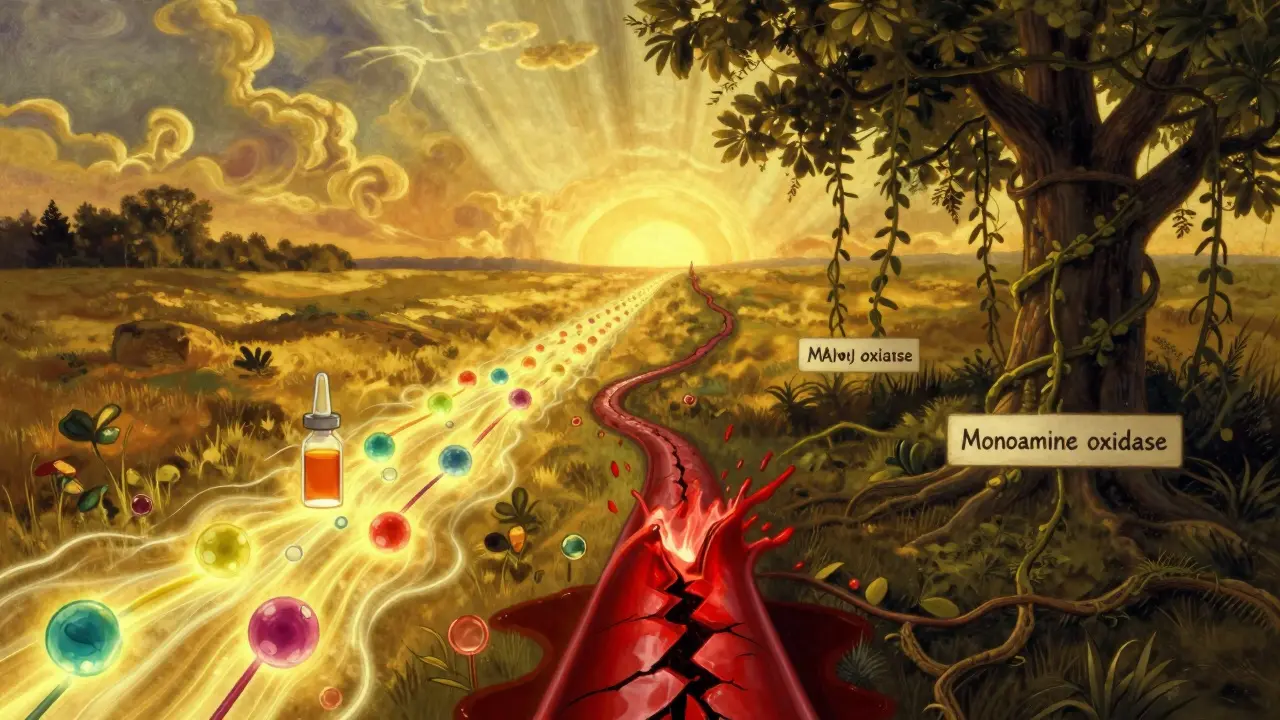
MAOIs, or monoamine oxidase inhibitors, are antidepressants that block the enzyme monoamine oxidase. This enzyme normally breaks down neurotransmitters like serotonin, dopamine, and norepinephrine. By stopping its job, MAOIs let these chemicals build up in the brain, which can lift mood. Common MAOIs include tranylcypromine, a non-selective, irreversible MAOI that increases levels of multiple neurotransmitters, phenelzine, another irreversible inhibitor with strong effects on norepinephrine, and selegiline, a transdermal patch that selectively targets MAO-B at low doses.
ADHD stimulants work differently. They push more dopamine and norepinephrine into the space between brain cells. methylphenidate, found in Ritalin and Concerta, mainly blocks reuptake, while amphetamine salts, like those in Adderall and Vyvanse, force the release of stored neurotransmitters. Both increase alertness and focus-but they also raise blood pressure and heart rate.
Put them together, and you get a double hit: MAOIs prevent the body from clearing excess neurotransmitters, while stimulants flood the system with more. The result? Norepinephrine piles up, blood vessels constrict, and pressure surges.
The Mechanism Behind Hypertensive Crisis
It’s not just about feeling jittery. A hypertensive crisis means your systolic blood pressure jumps above 180 mmHg and your diastolic hits over 110 mmHg. At that point, your heart is working too hard, your arteries are under extreme stress, and organs like your brain and kidneys can start to fail.
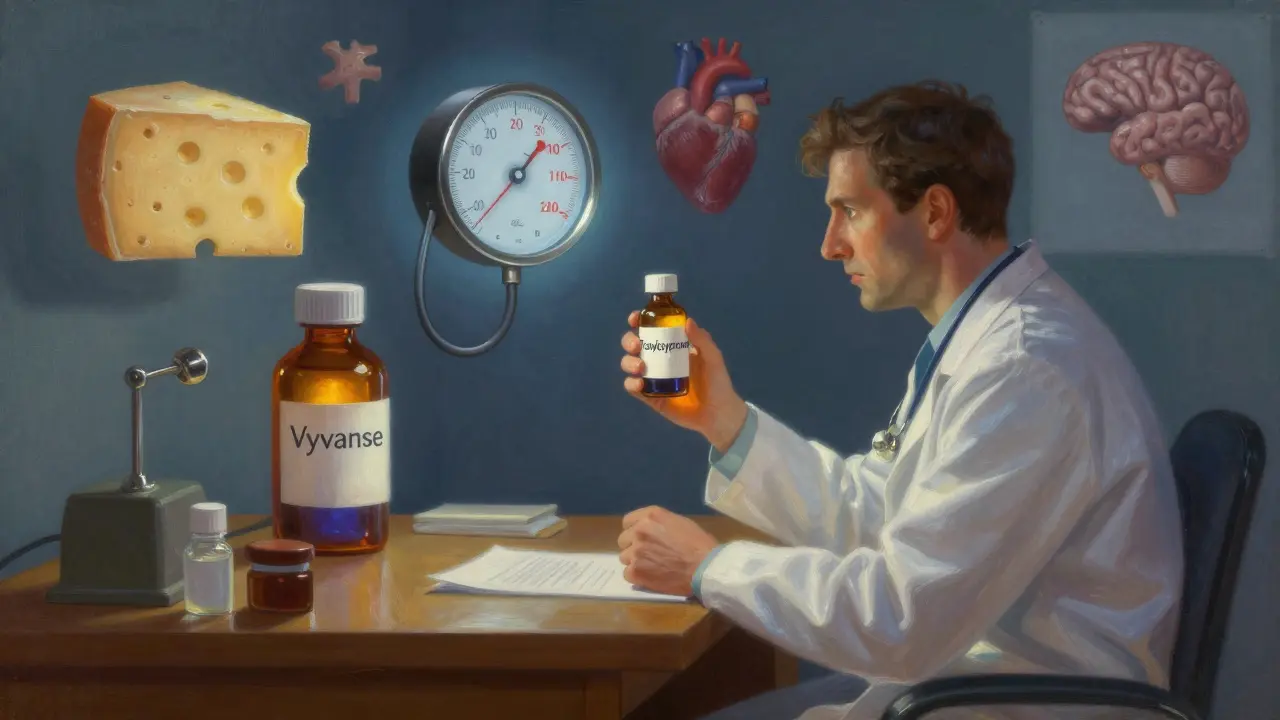
MAOIs, especially older ones like tranylcypromine, also stop your body from breaking down tyramine-a compound found in aged cheeses, cured meats, soy sauce, and draft beer. Normally, tyramine causes a small, harmless rise in blood pressure. But with MAOIs, it becomes a problem. Add a stimulant like Vyvanse, and that pressure spike becomes uncontrollable.
A 2022 meta-analysis of 137 clinical trials found that ADHD meds alone raise systolic pressure by 2-4 mmHg on average. But in some people, it jumps 15 mmHg or more. When you layer that on top of an MAOI, you’re not just adding numbers-you’re risking organ damage.
Which Combinations Are Most Dangerous?
Not all MAOIs or stimulants carry the same risk. Some are worse than others.
- Tranylcypromine is the riskiest. It irreversibly blocks both MAO-A and MAO-B, and it’s been linked to multiple cases of hypertensive crisis when paired with stimulants. One 2023 case report described a 42-year-old patient whose blood pressure soared to 210 mmHg after combining tranylcypromine with dextroamphetamine.
- Phenelzine is also dangerous, though slightly less so than tranylcypromine in some studies.
- Selegiline (Emsam patch) at low doses (6 mg/24h) is different. It mainly blocks MAO-B in the gut, not the brain, so it doesn’t interfere as much with tyramine. The FDA says its risk is “rare” at this dose-but it’s still there.
- Amphetamines (Adderall, Vyvanse) are riskier than methylphenidate. They release more norepinephrine directly, while methylphenidate mostly blocks reuptake. A 2005 review confirmed amphetamines cause stronger cardiovascular effects.
- Moclobemide, a reversible MAOI used outside the U.S., shows minimal interaction with stimulants in studies. But it’s not available in the U.S., so it’s not an option for most.
FDA and Clinical Guidelines: Strictly Contraindicated
The FDA doesn’t mince words. All ADHD stimulant labels carry a black box warning: “Concomitant use of MAOIs and CNS stimulants can cause hypertensive crisis. Potential outcomes include death, stroke, myocardial infarction, aortic dissection, and hypertensive encephalopathy.”
The official rule? No stimulants within 14 days of stopping an MAOI. Why 14 days? Because monoamine oxidase enzymes take that long to regenerate after being blocked by irreversible inhibitors like tranylcypromine. Even if you feel fine, your body is still vulnerable.
The American Psychiatric Association’s 2022 guidelines call this combination a “strong recommendation against” with “high quality of evidence.” Most psychiatrists won’t even consider it. And with MAOIs making up less than 1% of antidepressant prescriptions today-down from 5% in 2000-it’s clear most providers have chosen safety over experimentation.
Are There Any Exceptions?
Yes-but they’re rare, and only under extreme supervision.
A few specialized clinics, like Massachusetts General Hospital and Johns Hopkins, report using this combo in 5-7% of treatment-resistant depression cases with severe ADHD. These aren’t random decisions. They follow strict protocols:
- Start stimulants at 10-25% of the usual dose (e.g., 2.5 mg of dextroamphetamine instead of 10 mg).
- Monitor blood pressure every 15-30 minutes for the first few hours after each dose.
- Use home blood pressure monitors and require daily logging.
- Avoid all tyramine-rich foods-no blue cheese, salami, or tap beer.
- Exclude patients with pre-existing hypertension, heart disease, or a history of stroke.
- Never combine with other serotonergic drugs (like SSRIs or MDMA) to avoid serotonin syndrome too.
A 2017 case series followed 12 patients on lisdexamfetamine (Vyvanse) starting at 10 mg/day with transdermal selegiline. No hypertensive events occurred over six months. But these were highly selected patients, monitored by experts, and only after failed alternatives.
What If You’re Already on One of These Medications?
If you’re taking an MAOI and your doctor suggests adding an ADHD stimulant, ask: “Why now? What’s the evidence? What’s the backup plan if my blood pressure spikes?”
If you’re on a stimulant and your doctor wants to switch you to an MAOI, you need a 14-day gap. No shortcuts. Even if you feel fine after 7 days, the enzyme is still recovering.
And if you’re switching off an MAOI? Don’t start a stimulant until the full 14 days are up. That’s not a suggestion-it’s a medical requirement.
Real-World Data: Rare, But Deadly
Some experts argue the actual number of deaths from this interaction is extremely low. Dr. Richard Friedman, a professor at Weill Cornell, says he’s seen over 200 cases without incident. But that’s anecdotal. The FDA’s data includes documented fatalities. One patient died after combining phenelzine with Adderall. Another had a stroke after eating blue cheese while on tranylcypromine and taking methylphenidate.
The problem isn’t just the number of cases-it’s the outcome. Hypertensive crisis doesn’t wait. It hits fast. And if you’re not in a hospital, you won’t survive.
As Dr. Joseph Barnett from Cleveland Clinic puts it: “PEA causes the body to release more of its adrenaline-like chemicals... When combined with an MAOI and a stimulant, the full effects on blood pressure might be extreme.”
What Should You Do?
If you have ADHD and depression, here’s the reality:
- Don’t combine MAOIs and stimulants. The risk outweighs any potential benefit for 99% of people.
- If you’re on an MAOI and need ADHD treatment, try non-stimulant options like atomoxetine, a selective norepinephrine reuptake inhibitor approved for ADHD or guanfacine, an alpha-2 agonist used off-label for ADHD.
- If you’re on a stimulant and your depression isn’t improving, talk to your doctor about switching to an SSRI, SNRI, or therapy before considering an MAOI.
- Always tell every prescriber what you’re taking-even your dentist or ER doctor.
There are safer paths. You don’t need to risk your life to feel better.
Can I take Vyvanse if I’m on an MAOI?
No. Vyvanse (lisdexamfetamine) is an amphetamine-based stimulant. Combining it with any MAOI-whether tranylcypromine, phenelzine, or selegiline-can cause a sudden, life-threatening rise in blood pressure. The FDA explicitly prohibits this combination. Even if you’ve been on the MAOI for months, you must wait at least 14 days after stopping it before starting Vyvanse.
What if I accidentally took both?
Seek emergency medical help immediately. Symptoms of hypertensive crisis include severe headache, blurred vision, chest pain, nausea, confusion, or a pounding heartbeat. Don’t wait. Call 911 or go to the nearest ER. This is not something you can manage at home. Blood pressure above 180/110 mmHg requires urgent treatment with IV medications to prevent stroke or organ damage.
Is selegiline patch safer than oral MAOIs?
At low doses (6 mg/24h), the selegiline patch (Emsam) is less risky because it mainly blocks MAO-B in the gut, not MAO-A in the brain and liver. This means it doesn’t interfere as much with tyramine. But it’s not risk-free. The FDA still warns of rare hypertensive reactions. If you’re considering this patch while on a stimulant, it must be done under strict supervision with daily blood pressure checks. Never assume it’s safe without medical oversight.
Why do some doctors still prescribe them together?
In rare cases, when all other treatments have failed-for example, someone with treatment-resistant depression and severe ADHD-some specialists may cautiously combine them. But this only happens in academic medical centers with access to intensive monitoring. These are not routine decisions. They’re last-resort moves, with patients carefully screened, doses minimized, and blood pressure tracked multiple times a day. Most clinicians avoid it entirely.
How long should I wait after stopping an MAOI before starting a stimulant?
At least 14 days. This is the time it takes for your body to regenerate the monoamine oxidase enzymes that were permanently blocked by MAOIs like tranylcypromine or phenelzine. Some sources suggest waiting longer-up to 21 days-for maximum safety. Never shorten this period, even if you feel fine. The risk of hypertensive crisis doesn’t disappear just because symptoms seem gone.





Comments
Rachidi Toupé GAGNON
12 February 2026Yo this is wild but also makes total sense. I’ve seen people try to ‘tough it out’ with combo meds and it’s like playing Russian roulette with your heart. 🚨 Don’t be that guy. Stick to the science. Your future self will thank you. 💪
Jim Johnson
13 February 2026i used to work in a psych clinic and we had one dude who swore he was fine on vyvanse + selegiline patch… until his bp hit 208/120 at 3am. turned out he ate blue cheese and a bag of jerky. 911. ICU. 5 days. never again. just… don’t.
Vamsi Krishna
15 February 2026You people are being way too cautious. I’ve been on tranylcypromine for 7 years and took Adderall for 3 months last year. No issues. I even had a glass of red wine and aged cheddar. My BP? Perfect. The FDA is just scared of innovation. Real doctors know how to manage risk. You’re all overreacting. 😴
Suzette Smith
15 February 2026I dunno, I feel like the whole ‘don’t combine’ thing is just fear-mongering. I mean, people do way crazier stuff and live. What if the combo actually helps someone who’s been through everything else? Maybe we’re shutting down hope too fast.
Autumn Frankart
16 February 2026This whole thing is a Big Pharma scam. The FDA doesn’t want you to have real options because they’re paid off by SSRI manufacturers. MAOIs are ancient natural remedies. Stimulants are just ‘synthetic dopamine.’ They’re trying to control your mind. And they’re using ‘hypertensive crisis’ as an excuse to keep you docile. Wake up.
Pat Mun
16 February 2026I’ve been managing ADHD and treatment-resistant depression for over a decade, and honestly, this post saved my life. I was on a low-dose selegiline patch and considering adding methylphenidate because ‘it’s just a little.’ Then I read the 2022 meta-analysis and thought, ‘Wait, 15 mmHg spike? That’s like climbing Everest in flip-flops.’ I switched to atomoxetine last year. My focus is better, my anxiety is lower, and I sleep through the night. No drama. No ER visits. Just steady progress. You don’t need to risk your life to feel better - you just need to be patient and smart.
Craig Staszak
18 February 2026I’ve been on lisdexamfetamine for 4 years and just started Emsam last month. My doc said to monitor BP daily and avoid aged cheese. I’ve been doing that. No issues. I’m not saying it’s safe for everyone but if you’re careful and monitored? It can work. Don’t just shut it down because the label says no. Talk to a specialist.
Alyssa Williams
20 February 2026So many people are scared of MAOIs but they’re actually one of the most effective tools for treatment-resistant depression. And yeah, combining with stimulants is risky. But if you’re under expert care, with daily logs, no tyramine, and a 10mg starting dose? It’s not magic. It’s medicine. I’m living proof. 2 years stable. No crises. Just better focus and less crying. Don’t let fear silence your hope.
Kristin Jarecki
21 February 2026The clinical evidence is unequivocal: concomitant use of monoamine oxidase inhibitors and central nervous system stimulants constitutes a contraindication of the highest order. The pharmacodynamic synergy between increased synaptic norepinephrine and impaired enzymatic degradation creates a pathophysiological cascade that is both predictable and potentially fatal. The 14-day washout period is not arbitrary-it is grounded in the half-life of irreversible MAOI enzyme inhibition. Deviation from this protocol is not a personal choice; it is a violation of established neuropharmacological principles. Patient safety must supersede anecdotal exception.
Jonathan Noe
23 February 2026Let’s be real-most people don’t even know what MAOI stands for. I’ve had patients ask me if ‘that depression patch’ is like a nicotine patch. And then they take Adderall and eat a whole wheel of parmesan. It’s not about being scared. It’s about education. We need better public info. Not just scary labels. Teach people. Don’t just scare them.
Reggie McIntyre
25 February 2026I’m on selegiline patch and Vyvanse. Been doing it for 8 months. BP stays at 118/76. I track it every morning. No cheese, no soy sauce, no craft beer. I also take vitamin C and magnesium. My doc says I’m lucky. But I think it’s because I’m careful. Don’t write it off completely. Some of us are out here doing it right.