The Hatch-Waxman Act didn’t just tweak U.S. drug policy-it rebuilt it. Before 1984, generic drugs were rare. Fewer than 10 got approved each year. Today, they make up 90% of all prescriptions filled in America. That shift didn’t happen by accident. It was engineered by a law passed in September 1984, officially called the Drug Price Competition and Patent Term Restoration Act, but everyone calls it the Hatch-Waxman Act after its two sponsors: Representative Henry Waxman and Senator Orrin Hatch.
Why the Act Was Needed
In the early 1980s, there was a major roadblock to generic drugs. A Supreme Court case, Roche v. Bolar, ruled that even testing a patented drug before its patent expired was illegal. That meant generic companies couldn’t start preparing to launch their versions until after the patent ended. For a drug with a 20-year patent, that meant waiting nearly two decades to compete. Patients paid full price. Manufacturers held monopolies. And innovation was stuck.The Hatch-Waxman Act solved this by creating a legal safe harbor. Under 35 U.S.C. §271(e)(1), generic makers can now use patented drugs to run tests, conduct clinical trials, and gather data needed for FDA approval-even while the original patent is still active. This single change cut years off the path to market. It didn’t break patents. It just let generics prepare for the day they could compete.
The ANDA Pathway: How Generics Get Approved
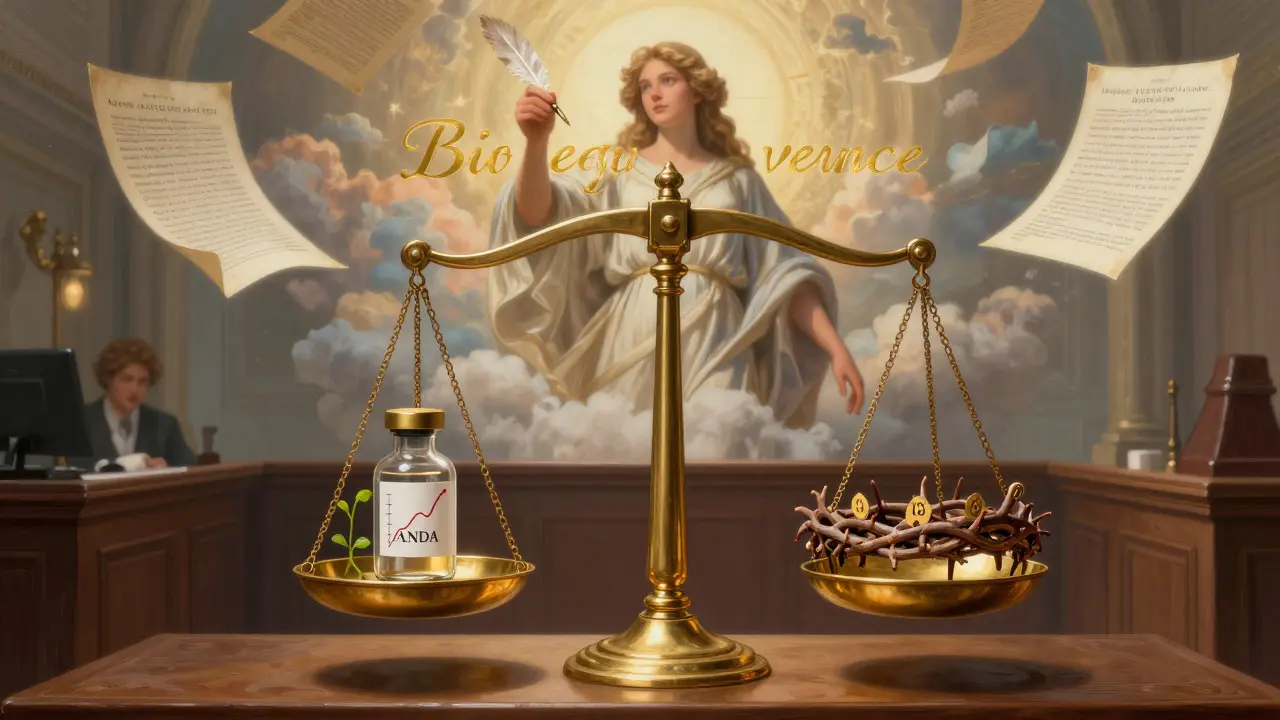
Before Hatch-Waxman, every new drug-whether brand or generic-had to go through the same long, expensive process: full clinical trials proving safety and effectiveness. That made generics financially impossible for most companies.The Act introduced the Abbreviated New Drug Application (ANDA). Instead of repeating every study, generic manufacturers only need to prove their version is bioequivalent to the original. That means it delivers the same amount of active ingredient into the bloodstream at the same rate. No need to test safety from scratch. No need to re-prove efficacy. Just prove it works the same way.
This cut development costs by about 75%. The FDA estimates that an ANDA costs roughly $1 million to file, while a full new drug application (NDA) can run $100 million or more. That’s why today, over 15,600 generic drugs are on the market. The ANDA system turned generics from a niche idea into the backbone of American prescriptions.
Patent Term Restoration: The Trade-Off
The Act didn’t just help generics. It also protected innovators. Pharmaceutical companies argued that the FDA approval process took years-time they couldn’t sell their drugs because the patent clock kept ticking. By the time a drug hit the market, half its patent life was already gone.Hatch-Waxman fixed that with patent term restoration. If a drug’s approval process delayed its market entry, the patent could be extended by up to five years. But there’s a cap: total exclusivity can’t exceed 14 years from FDA approval. On average, innovators gained about 2.6 extra years of protection per drug between 1984 and 2019.
This wasn’t a giveaway. It was a bargain: “You get extra time to profit, and in return, we give generics a clear path to enter the market.” The result? More innovation, more competition, and lower prices.
Paragraph IV Certifications and the 180-Day Exclusivity Prize
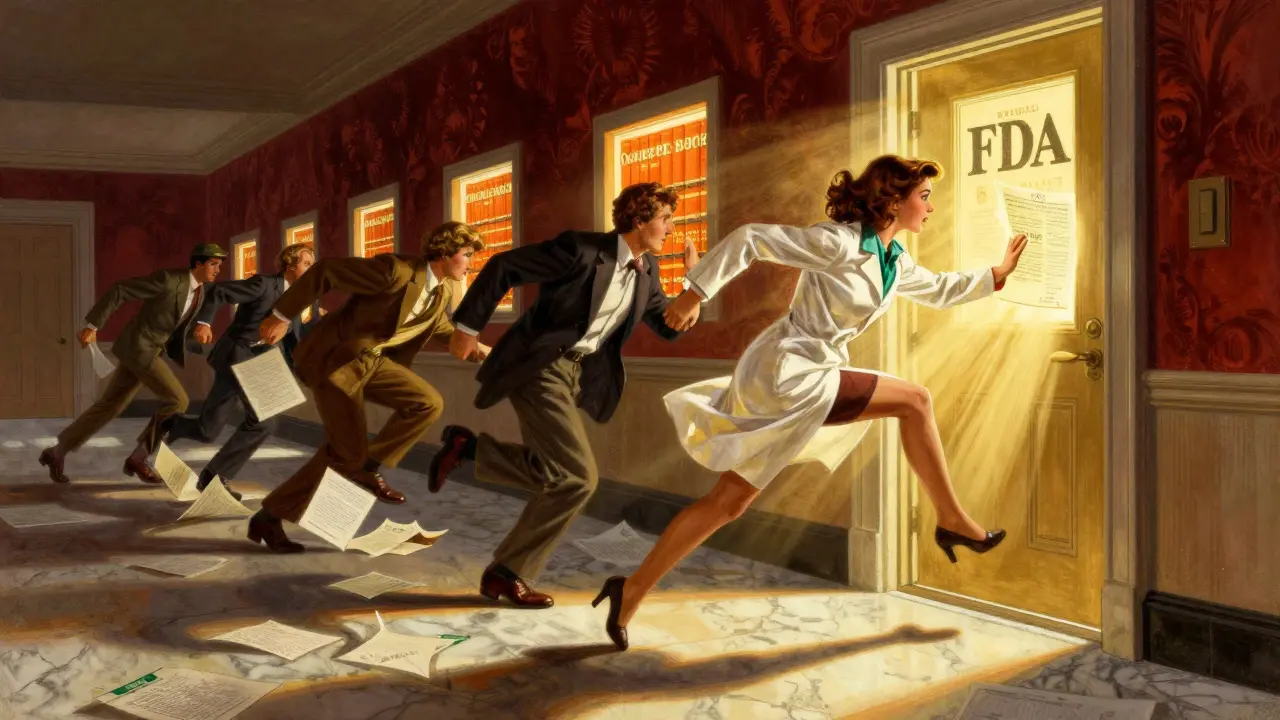
One of the most powerful-and controversial-parts of Hatch-Waxman is the Paragraph IV certification. When a generic company files an ANDA, it must check off one of four statements about patents listed in the FDA’s Orange Book. Paragraph IV says: “We believe this patent is invalid or we won’t infringe it.”That’s a direct challenge. Once filed, the brand-name company has 45 days to sue for patent infringement. If they do, the FDA must delay approving the generic for up to 30 months. But here’s the kicker: the first company to file a Paragraph IV certification gets 180 days of exclusive marketing rights after approval.
That 180-day window became a gold rush. Companies would race to the FDA’s door, sometimes camping out, just to be first. In 2003, the FDA changed the rules to allow shared exclusivity if multiple companies filed on the same day. But the incentive remains strong. For blockbuster drugs, that window can mean hundreds of millions in profits before competitors arrive.
What Went Wrong? Patent Thickets and Pay-for-Delay
The system worked well for years. But over time, loopholes emerged. Brand-name companies started filing dozens of patents on minor changes-new coatings, dosages, delivery methods-anything to extend protection. In 1984, the average drug had 3.5 patents listed. By 2020, it was 14.This created “patent thickets.” Instead of one patent blocking generics, there are 10, 20, even 50. Each one must be challenged. Legal fees for a single Paragraph IV case now average $15-30 million. Some generic companies spend 15-20 full-time employees just managing patent filings for one drug.
Then there’s “pay-for-delay.” Sometimes, a brand company will pay a generic maker to delay launching. These settlements were common between 2005 and 2012, affecting 10% of all generic challenges. The FTC estimates these deals cost consumers over $3.5 billion a year in higher drug prices.
“Product hopping” is another tactic. A company slightly reformulates a drug-say, switching from a pill to a capsule-and markets it as “new.” Patients are switched over. Then the original drug’s patent expires, but the new version’s clock starts fresh. Generics can’t enter until that new patent runs out.
The Numbers Don’t Lie
The impact of Hatch-Waxman is staggering:- Generic drugs now account for 90% of prescriptions but only 18% of total drug spending.
- Since 1991, the Act has saved the U.S. healthcare system $1.18 trillion.
- Generic competition cuts prices to 15% of the brand-name price within six months.
- The average U.S. generic enters the market 1.8 years faster than in Europe.
- In 2022, the generic drug market was worth $117 billion-up from $1 billion in 1984.
But the cost of gaming the system is rising. A 2020 study found patent abuse added $149 billion annually to prescription drug costs. The FTC has identified 262 drug monopolies extended beyond patent expiration between 2010 and 2022-mostly in oncology, immunology, and neurology.
What’s Changing Now?
Reform is coming. The 2022 CREATES Act closed one loophole: it now forces brand companies to provide samples to generic makers for testing. No more “refusing access” to delay competition.The 2023 Preserve Access to Affordable Generics and Biosimilars Act, passed by the House, would ban pay-for-delay deals entirely. The FDA is also cracking down on improper patent listings in the Orange Book. New guidance aims to stop companies from listing patents that don’t actually cover the drug’s use.
Under GDUFA IV, the FDA plans to cut ANDA review times from 10 months to 8 months by 2025. That’s a big deal. Longer reviews mean longer delays for patients who need affordable drugs.
But experts warn: overcorrecting could hurt innovation. Japan saw a 34% drop in new drug approvals after adopting a similar reform. The goal isn’t to tear down Hatch-Waxman-it’s to fix its abuses.
Is the Act Still Working?
Yes-but not perfectly. The original balance still holds: innovation is rewarded, and competition is enabled. Without Hatch-Waxman, we wouldn’t have the generic drug system we rely on today. Millions of Americans take generic pills for blood pressure, cholesterol, diabetes, and more-each one a victory for this law.The problem isn’t the framework. It’s how some players twist it. Patent thickets. Pay-for-delay. Product hopping. These aren’t features of Hatch-Waxman. They’re exploits.
As the FDA, Congress, and courts tighten rules around patent abuse, the Act’s core strengths remain: bioequivalence testing, patent term restoration, and the Paragraph IV challenge. Those tools still work. They just need to be used fairly.
The future of affordable drugs in America still depends on this 1984 law. It’s not broken. It just needs better guards against abuse.
What is the Hatch-Waxman Act?
The Hatch-Waxman Act, formally the Drug Price Competition and Patent Term Restoration Act of 1984, is a U.S. law that created the modern system for approving generic drugs. It allows generic manufacturers to prove their drugs are bioequivalent to brand-name drugs using an Abbreviated New Drug Application (ANDA), and it gives innovator companies extra patent time to make up for delays during FDA review.
How does the ANDA pathway work?
The ANDA pathway lets generic drug makers skip full clinical trials. Instead, they must prove their product is bioequivalent to the original brand-name drug-meaning it delivers the same amount of active ingredient into the bloodstream at the same rate. This cuts development costs by about 75% and speeds up approval.
Why is the 180-day exclusivity period important?
The 180-day exclusivity period is given to the first generic company to successfully challenge a brand-name patent via a Paragraph IV certification. During that time, no other generics can enter the market. This incentive drives competition and often leads to immediate price drops after the first generic launches.
What is a Paragraph IV certification?
A Paragraph IV certification is a legal statement made by a generic drug applicant when filing an ANDA. It claims that a patent listed in the FDA’s Orange Book is either invalid or won’t be infringed by the generic product. This triggers a 45-day window for the brand company to sue, and if they do, FDA approval is automatically delayed for up to 30 months.
What are patent thickets and how do they affect generics?
Patent thickets occur when brand-name companies file dozens of patents on minor changes to a drug-like a new coating, dosage form, or delivery method. These patents are often unrelated to the active ingredient but still block generics. With 14+ patents per drug today, up from 3.5 in 1984, generics face years of litigation before they can enter the market.
Has the Hatch-Waxman Act saved money?
Yes. Between 1991 and 2011, the Act saved the U.S. healthcare system $1.18 trillion. In 2022 alone, generic drugs saved $313 billion. Generics account for 90% of prescriptions but only 18% of drug spending, making them one of the most cost-effective parts of the U.S. healthcare system.


Comments
Tatiana Barbosa
7 February 2026Hatch-Waxman was the game-changer that made generics viable. Without that safe harbor for bioequivalence testing, we’d still be paying $500 for blood pressure pills. The ANDA pathway? Pure genius. It didn’t break patents-it just leveled the playing field. And let’s be real, the 180-day exclusivity? That’s what got the ball rolling. First filers didn’t just win-they rewrote the economics of pharma.
Now the abuse? Patent thickets? Pay-for-delay? That’s not Hatch-Waxman. That’s greed in a lab coat.
Ken Cooper
8 February 2026so like… i always thought generics were just cheap knockoffs? turns out they’re literally the same drug? like… same active ingredient? same absorption? that’s wild. and the whole ‘you can test before patent expires’ thing? mind blown. why didn’t anyone tell me this before? this is why my insulin costs 12 bucks now. thank you, congress (for once).
Joseph Charles Colin
10 February 2026The structural innovation of Hatch-Waxman lies in its bifurcated incentive architecture: patent term restoration (PTR) for innovators coupled with the Abbreviated New Drug Application (ANDA) pathway for entrants. This created a Pareto-optimal outcome where R&D investment was preserved while market entry latency was compressed. The 180-day exclusivity for Paragraph IV filers introduced a first-mover advantage that transformed generic entry from a slow trickle into a strategic race. The system’s efficiency is evidenced by the 99.8% bioequivalence rate in FDA-approved ANDAs since 1984.
John Sonnenberg
11 February 2026I can’t believe we’re still letting pharma companies get away with this. Patent thickets? Pay-for-delay? Product hopping? This isn’t innovation-it’s extortion. I’ve watched my dad take generics for his diabetes for 15 years. He paid $400 a month for the brand. Now? $12. And yet these companies are still fighting every single generic with lawsuits that cost millions. This isn’t capitalism. This is feudalism with a FDA stamp on it.
Joshua Smith
11 February 2026This is such a clean example of regulation working as intended. The balance was actually pretty elegant-reward innovation, enable competition. The real tragedy is how easily it got hijacked. The 180-day exclusivity was meant to incentivize challenges, not become a tool for collusion. And now we’re seeing Congress try to fix it with CREATES and Preserve Access. It’s slow, but it’s moving.
John Watts
13 February 2026Let me tell you something about the global impact. The U.S. generic system didn’t just lower prices here-it became the blueprint. India, Brazil, South Africa-they all modeled their pathways after ANDA. That’s why we now have access to life-saving HIV meds for $20 a month in sub-Saharan Africa. Hatch-Waxman didn’t just change American healthcare. It changed global health equity. And now we’re letting patent thickets and pay-for-delay undermine that legacy? We’re not just failing patients-we’re failing the world.
Randy Harkins
13 February 2026I’m so grateful for this law. My mom takes 7 medications. All generics. She saved over $12,000 last year just on pills. 💙 And now that the FDA is cracking down on improper Orange Book listings? Yes. Please. More of that. The system isn’t broken-it’s just been gamed. We need to go back to the spirit of the law: fair competition, not legal loopholes. 🙏
Chelsea Deflyss
13 February 2026i cant believe people still act like this law is some kind of miracle. it created a monster. the 180 day exclusivity? that’s why you see ONE generic come out, then nothing for months. companies just sit on it. and the lawsuits? they’re not about patents-they’re about delay. stop pretending this is about patients. it’s about money.
Marie Fontaine
14 February 2026The Paragraph IV certification is the most brilliant part. It turns litigation into a race. First to file, first to win. That’s capitalism with teeth. And when multiple filers tie? Shared exclusivity? Genius. It prevents monopolies from forming even within the generic space. The system’s not perfect, but it’s the only one that actually forces price drops within months. You want cheaper drugs? Don’t break Hatch-Waxman. Fix the abuses.
Lyle Whyatt
14 February 2026Look, I’ve been in this industry for 27 years. I’ve seen the before and after. Before Hatch-Waxman? A generic drug was a footnote. After? It became the backbone of primary care. But here’s what nobody talks about-the real unsung hero is the FDA’s ANDA review team. They’re underfunded, understaffed, and still processing 1,200 applications a year. If we want faster access, we need to fund the FDA properly. Not just pass laws. Actually give them the tools to execute them. The 10-month review clock? That’s a bottleneck. Cut it to 6 months. Let’s not romanticize the law-let’s fund the machinery that makes it work.
Tasha Lake
15 February 2026The ANDA pathway is what made this possible. Bioequivalence is the golden standard. You don’t need to re-prove safety if the active ingredient, dosage, and pharmacokinetics match. That’s science, not magic. And the patent term restoration? Fair trade. You give innovators 2.6 extra years on average? They invest billions more in R&D. It’s a symbiotic system. The problem isn’t the framework-it’s the lawyers who turned Paragraph IV into a war room.