
Alzheimer’s disease isn’t just forgetting where you put your keys. It’s losing the ability to recognize your own children, forgetting how to speak, and eventually needing help to eat or use the bathroom. It’s the most common cause of dementia, making up 60-80% of all cases. By 2025, over 7.2 million Americans aged 65 and older were living with it-and that number is expected to nearly double by 2060. This isn’t just aging. It’s a biological breakdown in the brain that starts years before symptoms show up.
What’s Really Happening in the Brain?
At the core of Alzheimer’s are two damaged proteins: beta-amyloid and tau. Beta-amyloid clumps together into sticky plaques between brain cells, while tau twists into tangled fibers inside them. These gunk piles choke off communication between neurons, especially in areas responsible for memory and thinking, like the hippocampus. Over time, brain cells die. The brain shrinks. It’s not just a memory problem-it’s a slow, silent destruction of the mind’s infrastructure.
Doctors now use biomarkers to confirm Alzheimer’s before symptoms get severe. Cerebrospinal fluid tests can detect low levels of amyloid-beta 42 and high levels of phosphorylated tau with 85-90% accuracy. Amyloid PET scans show these plaques directly, with 92% specificity. Tau PET scans are newer but still useful, catching tangles with 78% sensitivity. The problem? Only 35% of U.S. healthcare facilities offer these scans. Most people still get diagnosed based on memory tests and family reports-too late.
The Seven Stages of Progression
Alzheimer’s doesn’t hit all at once. It creeps in, then climbs. Experts break it into seven stages:
- Stage 1 (No impairment) - No signs. But plaques may already be forming.
- Stage 2 (Very mild decline) - Minor forgetfulness, like misplacing glasses. Often dismissed as normal aging.
- Stage 3 (Mild decline) - Trouble remembering names, losing things often, difficulty with planning. This is when many first seek help.
- Stage 4 (Moderate decline) - Forgetfulness becomes clear. Can’t manage finances, forgets recent events. Family members notice.
- Stage 5 (Moderately severe decline) - Needs help with daily tasks. Forgets personal history. May not recognize close family.
- Stage 6 (Severe decline) - Loses ability to communicate coherently. May wander. Needs help dressing, bathing, using the toilet.
- Stage 7 (Very severe decline) - Speaks few or no words. Cannot walk or sit up. Fully dependent. Often bedridden.
Most people live 4 to 8 years after diagnosis, but some survive up to 20. The speed depends on age, overall health, and how early treatment begins.
Current Medications: What Works and What Doesn’t
There are two main types of drugs approved for symptom relief:
- Cholinesterase inhibitors (donepezil, rivastigmine, galantamine): These boost a brain chemical called acetylcholine, which helps with memory. They work best in early to middle stages. About 40-50% of patients see a modest delay in decline-usually 3 to 6 months. Side effects? Nausea, vomiting, diarrhea, and sleep problems.
- Memantine: This one blocks excess glutamate, a brain chemical that can overstimulate and kill neurons. Used for moderate to severe Alzheimer’s. It doesn’t improve memory but can slow worsening. Often paired with cholinesterase inhibitors.
These drugs don’t stop the disease. They just buy time. For many, the side effects outweigh the benefits. One caregiver in Florida told me: “After six months on donepezil, my mother’s nausea and sleep disturbances outweighed any cognitive benefits.”

The New Frontier: Disease-Modifying Drugs
For the first time in 20 years, real hope is here. Three drugs approved since 2023 are now changing the game:
- Lecanemab (Leqembi): FDA-approved in January 2025. It removes amyloid plaques. In a trial of 1,795 people, it slowed cognitive decline by 27% over 18 months. But it comes with risks: 12.5% of users had brain swelling or bleeding (called ARIA). Monthly MRIs are required to monitor this.
- Donanemab: Showed even stronger results-35% slowing of decline in a trial of 1,182 patients. But ARIA risk is higher: 24%. It’s not yet FDA-approved as of early 2026, but expected soon.
- ALZ-801: An oral pill, not an infusion. Works best for people with two copies of the APOE-e4 gene (the strongest genetic risk factor). In a trial of 326 people, it cut cognitive decline by 81% in this group. This is a breakthrough for precision medicine.
These drugs aren’t cures. They’re not magic. But they’re the first to prove we can slow the disease-not just manage symptoms.
Why Most People Still Can’t Get These Treatments
Even with approval, access is a nightmare. Only 15% of eligible patients are getting these new therapies. Why?
- Cost: Lecanemab costs $26,500 per year. Medicare covers it, but many insurers deny claims. One caregiver in Ohio said: “My husband’s confusion decreased noticeably on lecanemab, but the biweekly infusions and constant MRIs became overwhelming.”
- Infrastructure: You need a certified center with MRI machines, neurologists, and infusion suites. 78% of these centers are in cities. Rural patients can’t reach them.
- Monitoring: Monthly MRIs to check for brain swelling? Many can’t afford the time or travel. Only 35% of U.S. facilities even offer amyloid PET scans.
And the clinical trials? Only 8% of participants in amyloid therapy trials are non-white-even though dementia affects Black and Hispanic populations at higher rates. That’s a huge gap.
What Else Helps? Lifestyle and Support
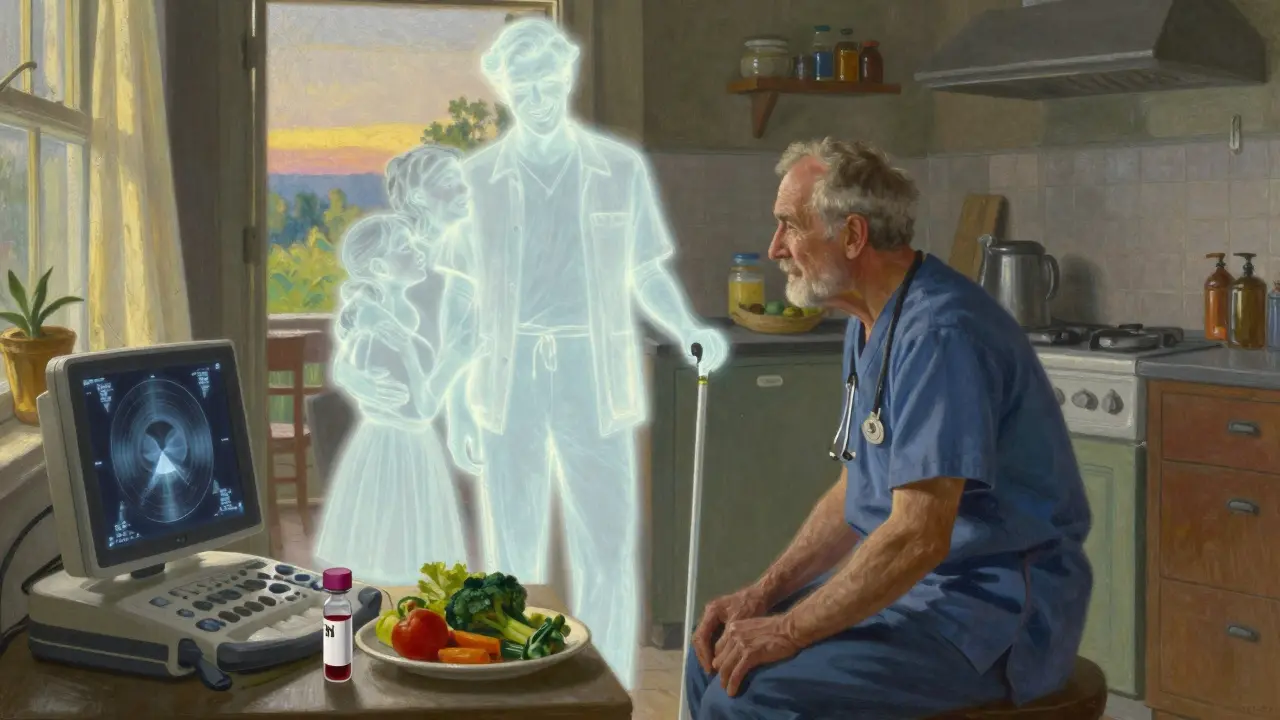
Drugs aren’t the whole story. The FINGER study showed that a mix of healthy eating, regular exercise, mental training, and managing blood pressure and diabetes can reduce cognitive decline by 25% over two years. Simple things matter: walking 30 minutes a day, eating more vegetables, controlling blood sugar, and staying socially connected.
Cognitive stimulation therapy (CST)-group activities like memory games, music, and discussions-improved memory scores by 1.5 points on the ADAS-cog scale in a 2024 review of 12 studies. That’s meaningful. Not a cure, but a boost.
And then there’s prevention. Dr. Carol Brayne of Cambridge University says 40% of dementia cases could be prevented or delayed by managing nine modifiable risks: high blood pressure, obesity, hearing loss, smoking, depression, inactivity, diabetes, low education, and social isolation. It’s never too late to act.
The Caregiver Burden
Behind every person with Alzheimer’s is someone else carrying the weight. Eighty-five percent of caregivers report high emotional stress. Forty percent show signs of depression. Sixty percent cut back on work, losing an average of $18,200 in income per year.
The Alzheimer’s Association’s 24/7 helpline handled 1.2 million calls in 2024. Most were caregivers asking: “How do I stop my loved one from wandering?” or “Why won’t they eat?” The answer? Support groups, training, and respite care. But only 22% of family caregivers ever get formal instruction. That’s not enough.
What’s Next?
The future isn’t just about amyloid. Researchers are now testing drugs that target tau, inflammation, metabolism, and even gut health. There are 127 active clinical trials exploring non-amyloid pathways. Blood tests are getting better too. The PrecivityAD2 test can now detect Alzheimer’s with 97% accuracy using just a blood sample-cutting the cost from $5,000 to $500. Imagine getting screened at your next doctor’s visit.
By 2030, experts believe we’ll match patients to treatments based on their genetic profile and biomarker status. Someone with APOE-e4 might get ALZ-801. Someone with early tau buildup might get a different drug. It’s precision medicine for the brain.
But we’re not there yet. The system is broken. Access is unequal. Costs are high. And too many people are still diagnosed too late. The tools exist. The science is advancing. What’s missing is the will to make these treatments available to everyone who needs them-not just those who can afford it or live near a major hospital.
Alzheimer’s isn’t just a medical problem. It’s a societal one. We need better screening, better training for doctors, better support for families, and fairer access to the new treatments. Because if we don’t fix this, millions more will lose their memories-and their dignity-before we’re ready.
Can Alzheimer’s be cured?
No, there is no cure yet. But new drugs like lecanemab and donanemab can slow the progression of symptoms, especially when started early. These treatments don’t reverse damage, but they can delay worsening by months or even years. Research into tau proteins, inflammation, and metabolism is ongoing, and combination therapies may offer more options in the next 5-10 years.
How do I know if someone has Alzheimer’s and not just normal aging?
Normal aging might mean forgetting a name and remembering it later. Alzheimer’s means forgetting the name entirely, not recognizing close family, repeating questions, or getting lost in familiar places. Other signs: trouble managing money, poor judgment, mood swings, and losing interest in hobbies. If these symptoms last more than a few months and interfere with daily life, it’s time to see a neurologist. Early testing with biomarkers can confirm if it’s Alzheimer’s.
Are the new Alzheimer’s drugs worth the cost and side effects?
It depends. For someone in the early stage with clear biomarker evidence, drugs like lecanemab can meaningfully delay decline-giving months or even a year of better function. But the side effects (brain swelling, bleeding) are real, and the cost is high. Many families struggle with insurance denials and the burden of monthly MRIs. For others, especially those in later stages or with serious health issues, the risks may outweigh the benefits. Talk to a specialist who can review your biomarker results and personal health profile.
Can lifestyle changes really prevent Alzheimer’s?
Yes, evidence shows they can reduce risk. The FINGER study found that a combination of diet, exercise, cognitive training, and managing blood pressure and diabetes cut cognitive decline by 25% over two years. Other studies link hearing loss, smoking, and social isolation to higher dementia risk. While you can’t change your genes, you can control your habits. Starting in your 40s or 50s is ideal-but it’s never too late to start.
Why are clinical trials for Alzheimer’s so lacking in diversity?
Historically, trials have focused on white, educated populations with access to major medical centers. But Alzheimer’s affects Black and Hispanic communities at higher rates, and they’re underrepresented in studies-only 8% of participants in recent amyloid trials were non-white. This means we don’t know if treatments work the same for everyone. Efforts are underway to partner with community clinics and offer transportation and language support, but progress is slow. Diversity in trials isn’t optional-it’s essential for effective, fair care.
What resources are available for caregivers?
The Alzheimer’s Association offers a free 24/7 helpline (1.800.272.3900), online support forums, local caregiver training, and respite care referrals. Many hospitals have memory clinics that offer caregiver workshops. Nonprofits like the Family Caregiver Alliance and the National Alliance for Caregiving provide toolkits, legal guidance, and emotional support. No one should try to do this alone. Asking for help isn’t weakness-it’s survival.





Comments
Denise Jordan
11 March 2026lol at all these expensive scans. my uncle got diagnosed after falling down the stairs and forgetting his own name. they just asked him to draw a clock and called it a day. no pet, no csf, just vibes and a clipboard.
Adam Kleinberg
12 March 2026They say lecanemab slows decline by 27% but what they don't tell you is that 12.5% of people end up with brain bleeds and have to get monthly MRIs like they're in some corporate wellness program. And who's paying for that? Not the 78% of rural folks who can't even get a neurologist to answer their phone. This isn't medicine it's a luxury subscription service for the rich and the desperate.
Chris Bird
13 March 2026you think this is bad wait till the pharma companies start selling brain scans as a yearly subscription. next thing you know they'll be charging you for memory retention like it's a cloud storage plan. they're not curing alzheimer's they're just making a new market for panic.
David L. Thomas
14 March 2026The amyloid hypothesis is still the dominant paradigm but the data on tau and neuroinflammation is starting to tip the scales. We're moving from a binary biomarker model to a multivariate risk stratification framework. The real breakthrough will be polygenic risk scores integrated with longitudinal metabolomic profiling. We're not far from personalized therapeutic trajectories based on APOE isoform and microglial activation profiles.
Gene Forte
14 March 2026There is hope. Not because of drugs or scans, but because people are still showing up. The caregiver who reads bedtime stories even when the words don't make sense. The neighbor who brings soup every Tuesday. The grandson who learns to hold his grandparent's hand like it's the first time. Science gives us tools, but love gives us reason. Keep showing up. Even when the memory is gone, the connection isn't.
Bridgette Pulliam
15 March 2026I appreciate the depth of this post. It's rare to see such a comprehensive overview that doesn't reduce Alzheimer's to a headline. The statistics are sobering, yes, but what resonated most was the caregiver burden section. I think we need to treat emotional labor as a public health issue-not an afterthought.
Randall Walker
15 March 2026So... we have drugs that work... sort of... but only if you live near a city, have good insurance, and don't mind getting your brain scanned every month... while being told you're 'eligible'... and your neighbor who's Black or Hispanic probably can't even get an appointment... because the trial didn't include people like him... so... what's the point again?
Mike Winter
15 March 2026I find it fascinating how we've come to treat neurodegeneration like a software bug to be patched, when perhaps it's more akin to an ecosystem collapse. We fix plaques, but ignore the soil. We pump in acetylcholine, but forget to water the roots. Maybe the real cure isn't in a vial-it's in community, in rhythm, in the quiet act of remembering someone's favorite song and singing it to them even if they don't respond.
Kenneth Zieden-Weber
16 March 2026You know what's wild? The same people who scream about 'medical freedom' and 'big pharma' are the first to beg for lecanemab when their mom starts forgetting their name. Hypocrisy isn't a bug-it's the business model. Meanwhile, the FINGER study showed walking and broccoli works better than half the drugs. But nobody wants to sell a kale smoothie as a 'breakthrough'.