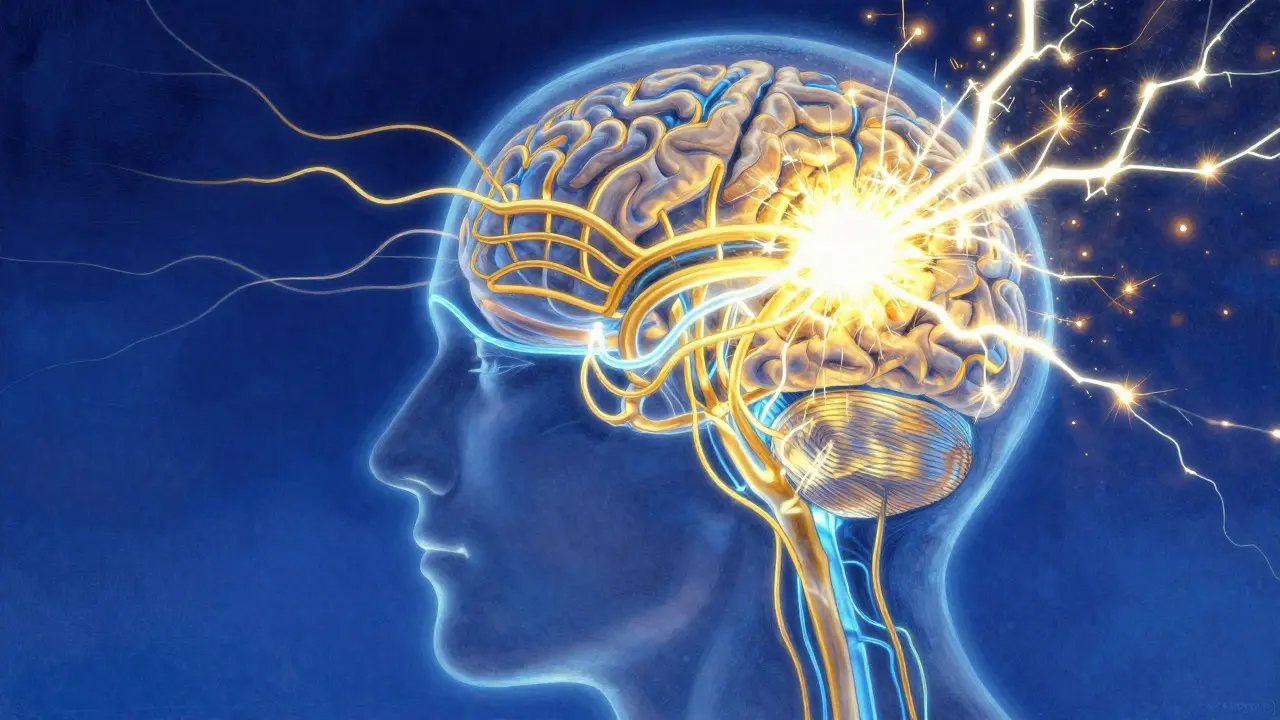
Imagine your brain as a massive electrical grid. Usually, the signals flow smoothly, but sometimes there's a sudden, uncontrolled surge of electricity. That's essentially what happens during a seizure. When these surges happen repeatedly and without an immediate external cause, a person is diagnosed with epilepsy is a neurological disorder characterized by an enduring predisposition to generate epileptic seizures. It is one of the most common neurological conditions globally, affecting roughly 50 million people worldwide. For many, the biggest challenge isn't just the seizures themselves, but the confusion surrounding the terminology and the process of finding the right medication to stop them.
| Metric | Global Impact (WHO) | US Impact (CDC) |
|---|---|---|
| Total People Affected | ~50 Million | ~3.4 Million |
| New Annual Diagnoses | ~5 Million | N/A |
| Population Percentage (US) | N/A | 1.2% |
Understanding Seizure Types: The 2025 Standard
If you've looked at old medical records, you might see terms like "simple partial" or "complex partial." These are outdated. The International League Against Epilepsy (ILAE) recently streamlined how we categorize seizures to make it easier for doctors to get the right treatment started. Instead of 63 confusing types, the 2025 update has narrowed it down to 21 distinct types. The goal is simple: stop the guesswork and get the patient the right meds faster.
Seizures are now broken down into a few main buckets based on where they start and what they look like:
- Focal Seizures: These start in one specific area of one brain hemisphere. They are the most common, accounting for about 60% of cases. They are further split into those where the person is "aware" (they know what's happening) and those with "impaired awareness" (they seem "out of it").
- Generalized Seizures: These involve both sides of the brain from the start. This category includes everything from "absence seizures" (which look like brief daydreaming) to the well-known "tonic-clonic" seizures involving muscle stiffening and shaking.
- Unknown Onset: This is used when the start of the seizure wasn't witnessed or the data is insufficient.
- Unclassified: Used when the seizure doesn't fit neatly into any category.
Why does this matter? Because treating a focal seizure with a drug designed for generalized seizures can sometimes make the condition worse. Accuracy here is the difference between a stable life and a constant struggle with breakthrough seizures.
Common Triggers and How to Spot Them
While some seizures happen randomly, many people have specific triggers that push their brain's electrical threshold over the edge. Knowing your triggers is like having a map to avoid landmines. Common culprits include sleep deprivation, high stress, and missed meals (which cause blood sugar drops).
For some, the triggers are more environmental. Photosensitive epilepsy is a classic example, where flickering lights or certain geometric patterns trigger a surge. However, for the majority of adults, the most dangerous trigger is often medication non-compliance. Missing a single dose of an antiepileptic drug can drop the "seizure threshold," making the brain far more susceptible to other triggers like alcohol or fever.

The Role of Antiepileptic Medications
The primary goal of treatment is "no seizures, no side effects." To achieve this, doctors use Antiepileptic Drugs (AEDs), which are designed to stabilize the electrical activity in the brain. These drugs basically act as "circuit breakers" that prevent the abnormal electrical discharges from spreading.
Choosing a medication isn't a one-size-fits-all process. It depends heavily on the seizure type identified during the classification process. For instance, a patient with focal epilepsy will be given a different set of medications than someone with childhood absence epilepsy. If a drug is misclassified, research shows it can lead to the wrong medication choice in up to 27% of cases.
| Seizure Class | Typical Goal | Key Consideration |
|---|---|---|
| Focal | Contain the seizure to the origin point | Avoid drugs that aggravate focal onset |
| Generalized | Widespread brain stabilization | Broad-spectrum coverage is usually required |
| Absence | Prevent brief consciousness gaps | Specific agents target these without causing sedation |
The Diagnostic Journey: From First Seizure to Control
Getting a diagnosis isn't always a straight line. Many patients spend over two years between their first symptom and an accurate diagnosis. The process usually starts with a clinical history-meaning the doctor needs a detailed account from anyone who saw the seizure. This is where a lot of errors happen, as witnesses often use vague terms like "he was shaking."
To get the full picture, doctors rely on an Electroencephalogram (EEG), which is a test that records electrical activity in the brain. An EEG can help distinguish between actual epilepsy and "mimickers," such as fainting (syncope) or psychogenic non-epileptic seizures (PNES). PNES are seizures that look like epilepsy but are actually caused by psychological distress rather than electrical malfunctions. These account for 20-30% of cases referred to specialized monitoring units, and treating them with AEDs wouldn't help because the cause isn't electrical.

Living with Epilepsy: Practical Tips for Daily Life
Managing epilepsy is a marathon, not a sprint. The most critical factor in long-term success is medication adherence. A study found that people who have an accurate classification of their seizure type are 34% more likely to stick to their medication, likely because they understand exactly why that specific drug is necessary.
Beyond the pharmacy, lifestyle adjustments make a huge difference. Creating a consistent sleep schedule is non-negotiable for many, as the brain is most vulnerable when exhausted. Additionally, using a seizure diary-either a physical notebook or a smartphone app-allows you to track patterns. If you notice that your seizures always happen on Tuesday afternoons, you might realize that a specific work stressor or a missed lunch is the hidden trigger.
What is the difference between a seizure and epilepsy?
A seizure is a single occurrence of abnormal electrical activity in the brain. Anyone can have a seizure once in their life due to a high fever, low blood sugar, or a head injury. Epilepsy is the medical condition characterized by a tendency to have repeated, unprovoked seizures.
Can epilepsy be cured with medication?
Medication doesn't "cure" epilepsy in the sense of removing the predisposition, but it can provide complete seizure control. For many, this means they can live a totally seizure-free life while taking their meds. In some cases, after years of being seizure-free, doctors may discuss a gradual tapering off of the drugs.
What should I do if I see someone having a seizure?
The most important thing is to keep the person safe. Ease them to the ground, turn them on their side to keep their airway clear, and put something soft under their head. Never put anything in their mouth, and do not try to restrain them. Stay with them until they are fully awake and alert.
How does the 2025 ILAE classification help patients?
By reducing the number of named seizure types from 63 to 21, the new system reduces the chance of misdiagnosis. It uses simpler language (like "awareness" instead of complex technical terms) which helps patients understand their medical records and ensures they are prescribed the most effective medication for their specific brain activity.
Are all seizures the same?
No. They range from "absence seizures," where a person simply stares blankly for a few seconds, to "tonic-clonic seizures," which involve a loss of consciousness and violent muscle contractions. Some are barely noticeable, while others require emergency medical attention.
Next Steps and Troubleshooting
If you or a loved one has experienced a first-time seizure, the immediate next step is a neurology consultation. Do not wait for a second occurrence to seek help. Request an EEG and, if possible, record a video of any future episodes, as this provides the doctor with a "visual EEG" that is often more valuable than the test itself.
If you are already on medication but still experiencing breakthrough seizures, keep a detailed log of everything that happened in the 24 hours leading up to the event. Did you skip a meal? Did you sleep only four hours? Was there a new medication or alcohol involved? This data allows your neurologist to decide whether to adjust your dosage or switch to a different class of antiepileptic drug.




Write a comment