Medications save lives. But they can also hurt you-sometimes in ways you won’t notice until it’s too late. You take a pill because your doctor said so, and you assume it’s safe. But what if the first sign of trouble isn’t a rash or a stomachache? What if it’s your heart racing, your throat closing, or your urine turning dark? These aren’t just side effects. These are red flags. And they need action, not waiting.
What Makes a Side Effect Dangerous?
Not all side effects are the same. A dry mouth from an antihistamine? Annoying, but not dangerous. A sudden drop in blood pressure after taking a new blood pressure pill? That’s a crisis waiting to happen. The FDA defines a serious side effect as one that causes death, hospitalization, disability, permanent damage, or birth defects. In 2022, adverse drug reactions sent over 1.3 million people to the emergency room in the U.S. alone. And about 128,000 died. The biggest danger isn’t the drug itself-it’s how fast things can go wrong. Some reactions show up within minutes. Others creep in over days. But once they hit a certain point, there’s no going back. Liver failure. Kidney shutdown. Internal bleeding. Cardiac arrest. These aren’t rare. They’re preventable-if you know what to look for.Immediate Red Flags: Call 911 Now
If you take a medication and then feel like something’s seriously wrong, don’t wait. Don’t text your doctor. Don’t Google it. Call 911.- Difficulty breathing or tightness in your throat-even if it’s mild. This isn’t allergies. This could be anaphylaxis, a full-body allergic reaction. Your airways swell. Your blood pressure crashes. You could lose consciousness in under 10 minutes.
- Swelling of the face, lips, tongue, or throat-especially if it comes on fast. This often happens with antibiotics, NSAIDs like ibuprofen, or even ACE inhibitors used for high blood pressure.
- Hives, rash, or skin peeling-especially if it’s spreading quickly. A red, itchy rash might seem harmless. But if it’s accompanied by fever, blistering, or peeling skin, it could be DRESS syndrome-a rare but deadly reaction that attacks your organs.
- Chest pain or irregular heartbeat-especially if your heart is racing over 100 beats per minute. Some medications, including certain antidepressants, asthma inhalers, and even decongestants, can trigger dangerous arrhythmias. Untreated, this can lead to cardiac arrest.
- Seizures or convulsions-even if you’ve never had one before. Medications like antibiotics, painkillers, or even some supplements can lower your seizure threshold.
- Loss of consciousness or extreme confusion-this isn’t just being tired. It could mean your brain is being affected by a drug overdose or toxic buildup. Opioids and benzodiazepines are common culprits.
Dr. Lisa Thompson, Chief Allergist at Mayo Clinic, says: “Any breathing difficulty combined with skin changes after taking a new medication should be treated as anaphylaxis until proven otherwise.” That means epinephrine and an ambulance-right now.
Warning Signs That Build Over Hours or Days
Some dangerous reactions don’t scream. They whisper. And that’s why they’re more deadly.- Yellowing skin or eyes (jaundice)-this is your liver screaming for help. Medications like statins, antibiotics, or weight-loss drugs like semaglutide can cause liver damage. If you also have dark urine, nausea, or severe stomach pain, you need an ER visit within hours.
- Unusual bleeding or bruising-if you’re taking blood thinners like warfarin or even aspirin, minor cuts shouldn’t turn into bruises the size of your palm. Nosebleeds that won’t stop, blood in stool, or coughing up blood? That’s not normal. It could mean your blood isn’t clotting anymore.
- Severe vomiting or diarrhea with blood-this isn’t food poisoning. It could be drug-induced pancreatitis or internal bleeding. Semaglutide (Ozempic, Wegovy) and some diabetes drugs have been linked to this. Mortality rates for untreated cases can hit 30%.
- Decreased urine output or swelling in legs and abdomen-your kidneys are failing. This can happen with NSAIDs, certain antibiotics, or even high doses of vitamin C. You might feel tired, confused, or just “off.” But your kidneys are already damaged.
- Extreme fatigue, dizziness, or rapid heartbeat without exertion-this could mean drug-induced anemia. Your body isn’t making enough red blood cells. Medications like chemotherapy drugs, some antibiotics, or even long-term use of proton pump inhibitors can cause this. Left untreated, it strains your heart until it gives out.
Harvard Medical School warns that excessive drowsiness-beyond what’s listed on the label-is a major red flag. If you can’t wake up, or you’re confused when you do, your central nervous system is being depressed. That’s especially true with opioids, sleeping pills, or anti-anxiety meds.
Who’s at Highest Risk?
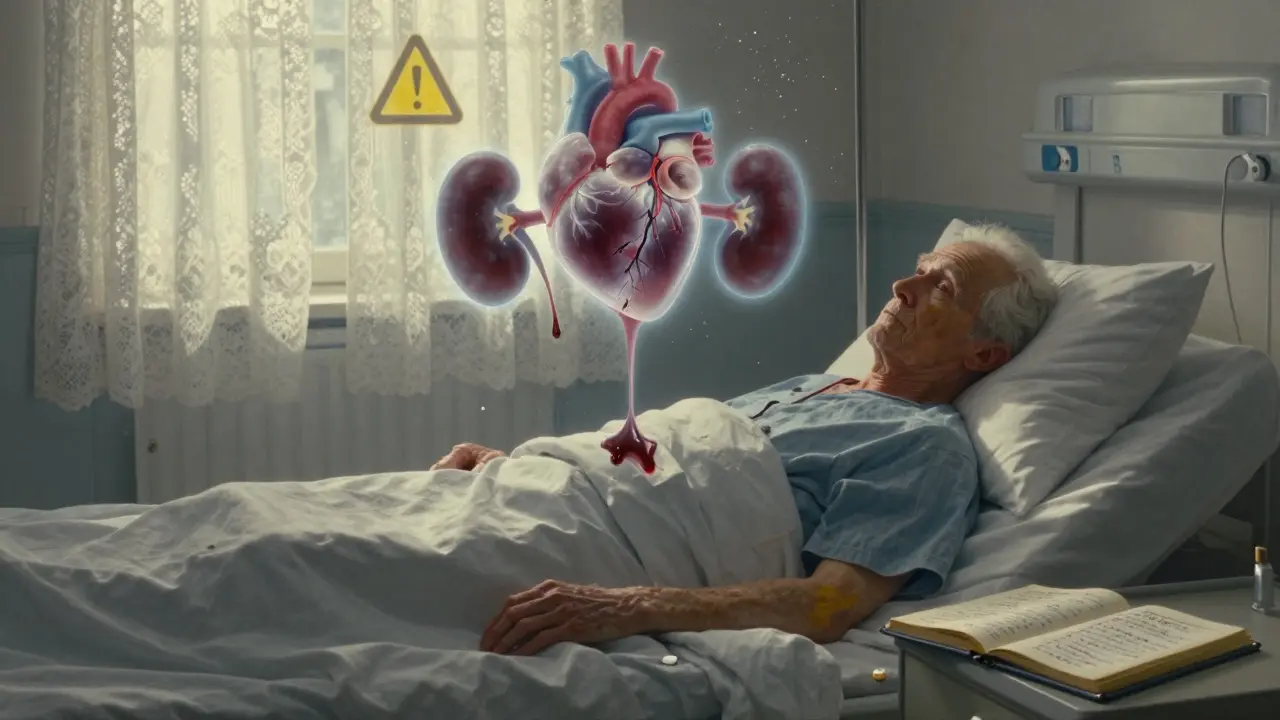
You’re not equally vulnerable to dangerous side effects. Some people are sitting on a ticking clock.- People over 65-your body processes drugs slower. The American Geriatrics Society says seniors experience side effects 2.7 times more often than younger adults.
- People taking five or more medications-this is called polypharmacy. It increases the chance of dangerous interactions by 300%. A blood pressure pill, a painkiller, a supplement, an antidepressant, and a statin? That’s a recipe for disaster if they’re not checked together.
- People with kidney or liver disease-your body can’t clear drugs the way it should. Even normal doses can build up to toxic levels.
- People with a history of allergies-if you’ve reacted to one drug, you’re more likely to react to another, even if it’s in a different class.
Look-alike, sound-alike drugs are another silent killer. Insulin and heparin are the most commonly confused. One wrong injection can kill. The Institute for Safe Medication Practices says these errors cause 12% of all dangerous side effects.
What to Do If You Suspect a Dangerous Reaction
Step 1: Stop taking the medication-unless your doctor told you not to. Stopping cold turkey can be dangerous too. Beta-blockers and antidepressants can cause rebound heart attacks or seizures if you quit suddenly. Step 2: Call your doctor or pharmacist right away. Don’t wait for an appointment. Say: “I took [medication name] and now I have [symptom]. I’m worried it’s serious.” They can tell you if it’s an emergency or if you need to be seen today. Step 3: If symptoms are severe-call 911. Don’t drive yourself. Don’t wait for a ride. Emergency responders carry epinephrine and can start treatment before you get to the hospital. Step 4: Bring all your medications to your next appointment. Use the Brown Bag Method: gather every pill, capsule, supplement, and OTC drug you take-even the ones you only use once in a while. Your doctor might spot a dangerous interaction you didn’t know about.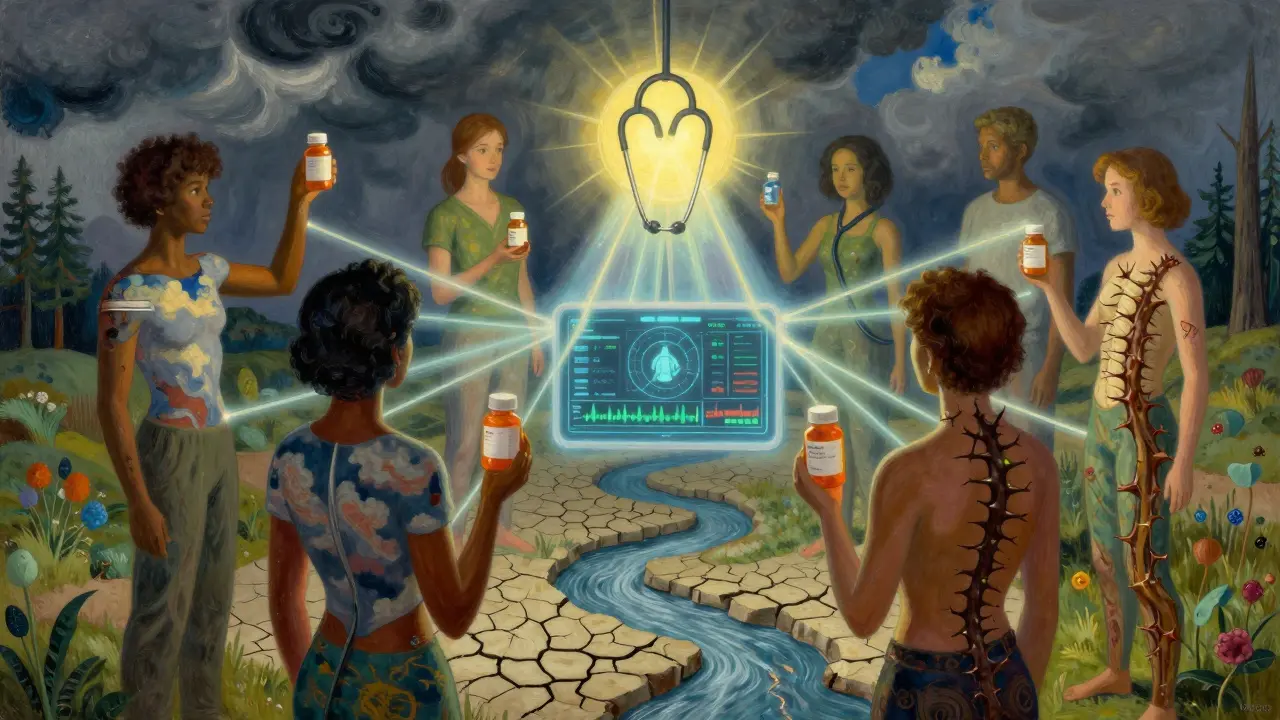
How to Prevent Dangerous Reactions Before They Start
Prevention beats reaction every time.- Ask your doctor: “What are the worst things this drug can do?” Not the common side effects. The life-threatening ones.
- Check for genetic risks. The NIH’s Pharmacogenomics Research Network found that testing for certain gene variants before prescribing drugs like carbamazepine reduces severe reactions by 47%.
- Use one pharmacy. They can track all your meds and flag interactions. Chain pharmacies have systems that alert pharmacists to dangerous combinations.
- Read the patient information leaflet. Not the pretty brochure. The small print. It lists the real risks.
- Track new symptoms. Keep a simple log: date, time, medication taken, symptoms. If you notice dizziness after starting a new drug, write it down. That’s data your doctor can use.
New technology is helping too. Mayo Clinic’s AI dashboard analyzes your age, weight, kidney function, and meds to predict your risk of side effects with 89% accuracy. Apple and the American Heart Association are testing wearables that detect medication-induced heart rhythm problems in real time. These tools aren’t magic-but they’re becoming part of the safety net.
Don’t Blame Yourself
You didn’t do anything wrong. Medications are complex. Doctors miss things. Pharmacists are overloaded. The system isn’t perfect. But you have power. You’re the one who takes the pill. You’re the one who notices the change. You’re the one who can speak up.Side effects aren’t a sign you’re weak. They’re a sign the system needs you to be alert. If you feel something’s off-trust it. Don’t second-guess. Don’t wait for someone else to notice. Your life depends on you being the first line of defense.
What are the most common dangerous side effects of medications?
The most common dangerous side effects include severe allergic reactions (anaphylaxis), internal bleeding, liver or kidney damage, irregular heartbeat, seizures, and pancreatitis. According to the FDA’s Adverse Event Reporting System, gastrointestinal bleeding, severe allergic reactions, and cardiac events are the top three reported serious reactions, with over 2.7 million combined reports in 2024.
How soon after taking a medication can a dangerous side effect occur?
Dangerous reactions can happen within minutes-like anaphylaxis-or take days to weeks, like DRESS syndrome or liver damage. Allergic reactions typically appear within an hour, but organ damage from medications like statins or antibiotics can build up slowly. If a symptom appears within 1-2 hours of taking a new drug, treat it as urgent. If it develops over days, don’t ignore it either.
Can over-the-counter drugs cause life-threatening side effects?
Yes. Common OTC drugs like ibuprofen and naproxen can cause internal bleeding, kidney failure, or heart attacks, especially in older adults or people with existing conditions. Acetaminophen (Tylenol) overdose is the leading cause of acute liver failure in the U.S. Even herbal supplements like kava or green tea extract have been linked to liver damage. Never assume “natural” means safe.
Should I stop taking my medication if I think I’m having a side effect?
Only if it’s an emergency. For symptoms like trouble breathing, swelling, or chest pain, call 911. For less urgent symptoms like a rash or nausea, contact your doctor before stopping. Abruptly stopping medications like beta-blockers, antidepressants, or seizure drugs can cause dangerous withdrawal effects, including heart attacks or seizures.
How can I reduce my risk of dangerous medication side effects?
Use one pharmacy, bring all your meds (including supplements) to every doctor visit, ask about genetic testing if you’re on high-risk drugs, and track new symptoms in a journal. Seniors and those on five or more medications should have a medication review every 3-6 months. Avoid mixing alcohol with sedatives, painkillers, or antidepressants. And never take someone else’s prescription.



Comments
Nancy Kou
19 December 2025My dad went to the ER last year because he thought his new blood pressure med was just making him dizzy. Turns out his kidneys were shutting down. They didn’t catch it until his creatinine hit 5.2. He’s fine now, but if he’d waited another day, he might not have been. This post saved my life. Share it with everyone you know.
Tim Goodfellow
19 December 2025God, I wish someone had told me this when I was on that damn statin. I thought the muscle pain was just aging. Turns out my liver enzymes were through the roof. Took three months to recover. Now I keep a little notebook next to my pill organizer. Date, symptom, dose. No more guessing. Knowledge is armor.
Elaine Douglass
21 December 2025I used to ignore the little things like a weird rash or feeling off after a new med until I saw my aunt get hospitalized for DRESS syndrome. She didn’t even know what it was called. Now I tell everyone I know to read the tiny print. It’s not scary, it’s just smart
Hussien SLeiman
21 December 2025Let’s be real, the medical system is a money-driven circus. Doctors don’t have time to explain risks. Pharmacists are overwhelmed. And yet they still act like you’re stupid if you question a prescription. This post is right, but it’s also a symptom of a broken system where patients are expected to be amateur toxicologists just to stay alive. The real danger isn’t the drug-it’s the indifference.
Nicole Rutherford
23 December 2025Of course you’re being told to call 911. But have you ever noticed how every single drug ad ends with a list of side effects that sound like a horror movie? That’s because they’re all designed to scare you into compliance. The real danger is that they profit from your fear. You think they want you to survive? They want you to keep buying. And if you die? There’s another patient waiting in line.
Chris porto
23 December 2025I think the real lesson here is that we’ve outsourced our bodies to machines and scripts. We trust pills like they’re magic. But our bodies aren’t broken. They’re trying to tell us something. The symptoms aren’t the enemy-they’re the signal. The problem is we’ve trained ourselves to ignore the signal until it screams. Maybe we need to listen more, and prescribe less.
Guillaume VanderEst
24 December 2025My cousin took OTC ibuprofen for a headache. Three days later, she was in the ICU with GI bleeding. They said she had no risk factors. No history. Just a pill. That’s the thing-no one expects it to happen to them. Until it does. And then it’s too late. Please, just be careful. Don’t be the person who says ‘I didn’t know.’
Lynsey Tyson
25 December 2025I’ve been on six meds for years and never thought twice until I started getting weird bruising. I thought I was just clumsy. Turns out it was warfarin interacting with a new supplement I’d been taking. My pharmacist caught it during a routine check. I didn’t even know to ask. We need more people like her.
Alisa Silvia Bila
25 December 2025My mom’s on five meds. She forgets which is which. I made her a color-coded chart. Simple. Works. Don’t overcomplicate it. Just track. Just ask. Just speak up.
Janelle Moore
25 December 2025Did you know the FDA approves drugs based on trials that last six months? But people take these pills for decades. They don’t test for long-term damage. They don’t care. And now they’re pushing AI to ‘predict’ side effects? That’s just putting lipstick on a pig. The real solution? Stop giving so many drugs. Let people heal naturally. The pharmaceutical lobby doesn’t want that.
Henry Marcus
27 December 2025They’re watching you. Every time you take a pill, it’s logged. Your heart rate, your sleep, your lab results-fed into a database. The AI dashboard? It’s not helping you. It’s profiling you. They know when you’re about to have a reaction before you do. And then they sell that data. To insurers. To employers. To the government. You think this is about safety? It’s about control.
Carolyn Benson
27 December 2025It’s not about the drugs. It’s about the hierarchy. The doctor holds the power. The patient holds the silence. And the system thrives on that imbalance. You’re told to ‘trust your doctor’-but what if your doctor doesn’t know? What if they’re pressured to prescribe? What if they’re incentivized to ignore red flags? The system doesn’t want you to be vigilant. It wants you to be obedient. And obedience kills.
William Liu
27 December 2025Thanks for putting this out there. I used to think I was being paranoid for asking questions. Now I know I was just being smart. Keep speaking up. Someone’s life might depend on it.