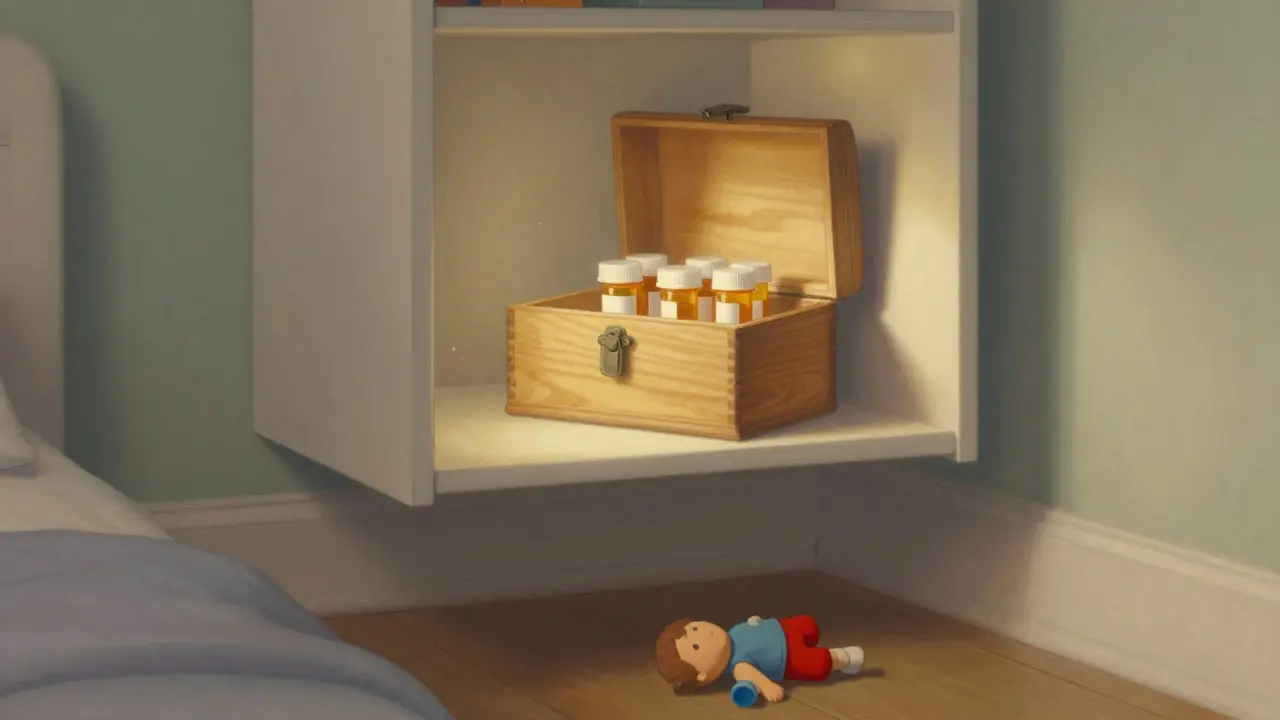
Every year, thousands of people in the U.S. die from drug overdoses - and many of those deaths start with a pill bottle sitting on a nightstand or in a kitchen cabinet. It’s not always a stranger or a dealer who causes the tragedy. Often, it’s a child, a teenager, or even an elderly parent who accidentally finds the medicine. The good news? You can stop this before it starts. Storing high-risk medications properly isn’t just a suggestion - it’s a lifesaving step that takes minutes to set up and protects everyone in your home.
What Counts as a High-Risk Medication?
High-risk medications aren’t just illegal drugs. They include prescription painkillers like oxycodone, hydrocodone, fentanyl patches, and morphine. They also cover certain sedatives like benzodiazepines (e.g., alprazolam, diazepam) and sleep aids like zolpidem. These drugs are powerful. Even a single pill can be deadly to someone who hasn’t been prescribed it - especially children or people with no tolerance.The U.S. Food and Drug Administration (FDA) and the Centers for Disease Control and Prevention (CDC) both classify these as controlled substances because of their high potential for misuse and overdose. In 2020, over 16,000 overdose deaths in the U.S. were tied directly to prescription opioids. And according to the National Survey on Drug Use and Health, more than half of people who misuse prescription opioids get them from friends or family - often because they were left unsecured.
Why Storage Matters More Than You Think
Storing these medications safely isn’t about being paranoid. It’s about preventing the most common cause of accidental overdose: easy access.Here’s what happens when you don’t lock them up:
- A toddler pulls open a drawer and finds fentanyl patches - one patch can kill a child.
- A teenager takes a few pills to cope with stress, doesn’t realize how strong they are, and overdoses.
- An elderly relative grabs the wrong bottle by mistake and takes a double dose.
- A family member with a history of addiction finds the pills during a relapse trigger.
According to the American Association of Poison Control Centers, over 60,000 children under 12 visit the emergency room every year because they swallowed someone else’s medication. In 89% of those cases, the drugs were left out in plain sight.
Locking up your meds doesn’t just protect kids. It protects your whole household.
The 5-Step Secure Storage System
You don’t need fancy tech or expensive gear. Just follow these five simple steps, backed by CDC and FDA guidelines:- Keep them in original containers. Never transfer pills to pill organizers, snack bags, or empty spice jars. Original bottles have child-resistant caps, clear labels, expiration dates, and dosage instructions. Removing them makes it harder to track what’s left - and easier for someone to mistake them for candy.
- Use a locked container. A simple lockbox works. Look for one that meets ANSI Grade 2 standards - these are tested to resist forced entry for at least 10 minutes. Basic models cost $15-$25. Biometric or smart lockboxes run $80-$150 but aren’t necessary for most homes. The CDC says locked storage reduces accidental ingestions by 87%.
- Store them up high and out of sight. Keep the lockbox at least 4 feet off the ground. Kids under 6 can reach up to 36 inches. That means your medicine cabinet, nightstand, or coffee table? Too low. A high shelf in a closet, a locked cabinet above the bathroom sink, or even a locked drawer in a dresser works.
- Use child-resistant caps correctly. Don’t just snap them shut - twist them down until they click. Many people think they’ve secured the cap, but they didn’t lock it fully. Test it: try opening it like a child would. If it’s too easy, you’re not doing it right.
- Track your supply. Every day, check how many pills are left. Write it down: “42 tablets at 8:00 AM.” This helps you notice if someone is taking them. If you’re missing pills and didn’t take them, it’s a red flag.
Setting this up takes about an hour. Maintaining it? Just two to five minutes a day.
What Not to Do
There are a lot of myths about safe storage. Here’s what doesn’t work:- Putting pills in the fridge. Cold doesn’t stop a determined kid. Plus, moisture can ruin some medications. Most opioids should be stored between 68-77°F (20-25°C).
- Leaving them in the car. Heat and humidity damage pills. And if your car gets broken into? The meds are gone.
- Using a “hidden” spot like behind a book or under a sock. Kids are curious. They’ll find it.
- Sharing your meds with others. Even if you think they “need it,” giving someone your prescription is illegal and dangerous. Their body may react badly.
What If You Can’t Open Child-Resistant Caps?
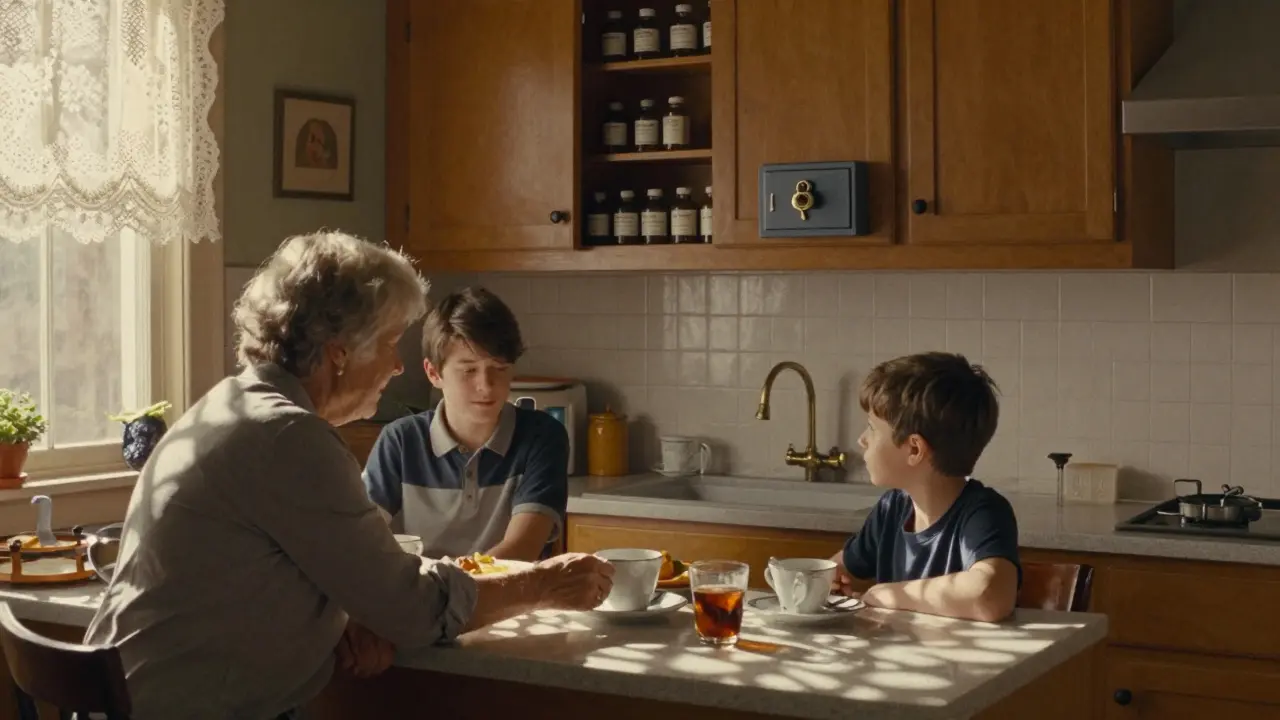
This is a real problem - especially for older adults with arthritis or limited hand strength. You shouldn’t have to choose between safety and access.There are solutions:
- Ask your pharmacist for a non-child-resistant cap. They’re allowed to give you one if you have a documented disability.
- Use a lockbox with a keypad or code - like the Med-ic Safe Locking Pill Organizer ($35). You set a 4-digit code, so you don’t need to twist anything.
- Ask a family member or caregiver to manage the lockbox and dispense doses.
The goal isn’t to make it hard to take your medicine. It’s to make it hard for someone else to take it without your knowledge.
What About Electronic Monitors?
Smart pill dispensers like Hero Health or MedMinder can track when someone opens the box and send alerts to your phone. They sound great - and they’re 95% accurate. But they’re expensive ($99-$149), need Wi-Fi, and require setup. Less than 3% of people using opioids use them.For most households, a $20 lockbox is just as effective. Save the tech for complex cases - like someone with dementia or a history of addiction.
What If You’re Worried About Someone Else’s Medications?
Maybe your teen is visiting a relative who keeps pills on the counter. Or your elderly parent lives alone and can’t manage their meds safely.You can help:
- Ask if they’ve locked up their meds. If not, offer to buy them a lockbox.
- Volunteer to manage their medication schedule - even just checking the count once a week.
- Encourage them to use a pharmacy take-back program. Many CVS, Walgreens, and local police stations have drop-off bins for expired or unwanted pills.
Don’t wait for a crisis. Talk now.
What If You Need to Dispose of Unused Medications?
Don’t flush them. Don’t throw them in the trash. Both can harm the environment or be found by someone else.Use a Drug Take-Back Program:
- The DEA runs National Prescription Drug Take Back Day twice a year (April and October).
- Over 14,600 permanent collection sites exist across the U.S., including pharmacies and police stations.
- Find your nearest drop-off point at deas takebackday website (no need to link - just know it exists).
If no drop-off is available, mix pills with coffee grounds or cat litter in a sealed bag, then throw them in the trash. Remove or black out labels first.
Real Stories, Real Consequences
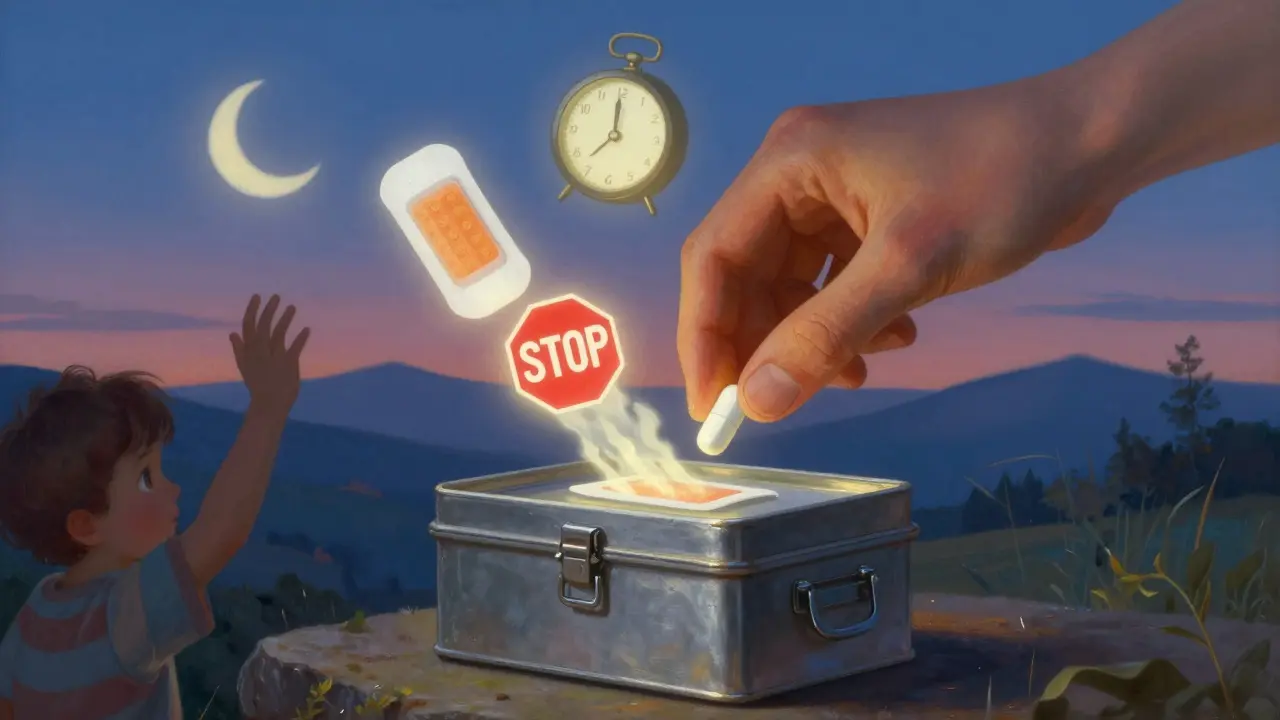
One Reddit user shared: “My doctor never told me to lock up my oxycodone. My 16-year-old found them in my nightstand and overdosed - thank God Narcan worked.”Another wrote: “The Walgreens lockbox saved my toddler from accessing grandma’s fentanyl patches. She pulled three drawers down trying to get it.”
These aren’t rare. They’re common. And they’re preventable.
Why This Isn’t Just a Personal Issue
When you store your meds safely, you’re not just protecting your family. You’re helping reduce the opioid crisis.Every unsecured pill is a potential overdose waiting to happen. The CDC estimates that if every household with high-risk medications locked them up, we could prevent over 28,000 overdoses by 2027. That’s tens of thousands of lives saved.
And the cost? A $20 lockbox. Five minutes a day. That’s the lowest-cost, highest-impact intervention we have.
Final Checklist: Are You Doing It Right?
Go through this before you leave the house today:- Are all high-risk meds in their original bottles?
- Are the caps fully locked?
- Is the container locked?
- Is it stored above 4 feet?
- Did you check the count today?
If you answered yes to all five - you’re doing it right. If not, fix it now. Today.
Can I just keep my opioids in the bathroom cabinet?
No. Bathroom cabinets are often too low and too accessible. Kids can reach up to 36 inches, and many cabinets are unlocked. Even if it’s a high cabinet, it’s not locked - and that’s the problem. Use a locked box on a high shelf in a closet or bedroom instead.
What if my child opens the lockbox?
If your child gets into locked medication, call Poison Help at 1-800-222-1222 immediately. Even if they seem fine, some drugs act slowly. Do not wait for symptoms. Keep Narcan on hand if you’re storing opioids - it can reverse an overdose in minutes. Most pharmacies give it out for free with a prescription.
Do I need to lock up my blood pressure or diabetes meds?
Not unless they’re part of a controlled substance. Blood pressure pills, insulin, and most diabetes medications aren’t classified as high-risk for overdose. But if you’re unsure, ask your pharmacist. If the pill has a DEA schedule (like Schedule II or III), it needs to be locked up.
Is it okay to share my pain meds with a friend who’s hurting?
No. It’s illegal and dangerous. Your prescription is tailored to your body, weight, and medical history. Someone else might overdose on the same dose. Even if you mean well, you’re putting their life at risk.
What if I can’t afford a lockbox?
Many pharmacies, community health centers, and opioid treatment programs give out free lockboxes. Ask your pharmacist or call your local health department. You can also use a locked drawer, toolbox, or even a locked suitcase - as long as it’s out of reach and secured with a key or combination.
Next Steps
If you’re storing meds right - great. Keep going.If you’re not - here’s what to do today:
- Find all your high-risk medications.
- Put them back in original bottles with child-resistant caps locked.
- Buy or borrow a lockbox (under $30 at any pharmacy).
- Place it up high - not in the bathroom, not on the nightstand.
- Check the count tomorrow morning.
That’s it. No apps. No subscriptions. No complicated rules. Just five simple actions that can save a life - maybe even your own.



Comments
Donna Peplinskie
1 January 2026Just read this and cried. My cousin lost her 14-year-old last year after finding her dad’s oxycodone in the bathroom cabinet. He never thought it was a big deal because ‘it’s just medicine.’ I bought her a lockbox last week. She cried when she opened it. We need to talk about this more.
Alex Warden
3 January 2026This is why America’s falling apart. Parents can’t even take care of their own pills. If you can’t lock up your meds, you shouldn’t have them. It’s not rocket science. Stop being lazy and protect your kids.
Todd Nickel
4 January 2026The data presented here is statistically robust and aligns with CDC guidelines from 2020–2023, particularly regarding the 87% reduction in accidental ingestions when using ANSI Grade 2 lockboxes. However, I’d argue the emphasis on ‘child-resistant caps’ is somewhat misleading; these are designed to delay-not prevent-access by children under six, and their efficacy diminishes significantly after repeated use. A more comprehensive solution would integrate both physical containment and behavioral monitoring, especially in households with adolescents who may be more technically adept at bypassing simple locks.
Austin Mac-Anabraba
5 January 2026Let’s be honest-this whole ‘lock your meds’ thing is just another way for the medical-industrial complex to profit off fear. Who’s really benefiting here? Lockbox manufacturers, pharmacy chains selling overpriced ‘smart’ dispensers, and insurance companies avoiding liability. Meanwhile, real addicts are still getting their fix from the streets. This isn’t prevention-it’s performative safety. You don’t solve a systemic crisis by putting pills in a $25 box.
Phoebe McKenzie
5 January 2026THIS IS WHY WE NEED TO CRACK DOWN ON DOCTORS WHO PRESCRIBE OPIOIDS LIKE CANDY. THEY’RE KILLING OUR KIDS AND THEN SAYING ‘JUST LOCK IT UP’ LIKE THAT’S ENOUGH. NO. THEY SHOULD BE CRIMINALLY CHARGED. I’VE SEEN MY NEIGHBOR’S 12-YEAR-OLD GET HIGH ON HIS DAD’S FENTANYL PATCHES. AND NOW HE’S IN REHAB. THE SYSTEM IS BROKEN. LOCKBOXES ARE A BAND-AID ON A GUNSHOT WOUND.
gerard najera
6 January 2026Lock it up. Check it. Done.
Stephen Gikuma
7 January 2026Who’s really behind this push for lockboxes? The DEA? Big Pharma? The same people who flooded neighborhoods with pills in the first place? Now they want us to buy their $80 smart boxes so we feel safe while they keep selling. It’s a distraction. The real problem is the pharmaceutical lobby and their grip on the FDA. Don’t fall for it. This isn’t safety-it’s control.
Bobby Collins
8 January 2026my mom keeps her pills in a shoebox under her bed and says ‘who’s gonna dig through my socks?’ lmao. she’s 72 and has arthritis. she can’t even twist the caps. i told her to get a lockbox but she says ‘i don’t wanna be paranoid.’ guess who’s gonna be the one cleaning up when she forgets she already took her pill and takes another? 😭
Layla Anna
8 January 2026I’m from a small town in Kentucky and we’ve lost so many people to this... I just gave my grandma a lockbox for her birthday. She didn’t want it at first but now she calls me every morning to say ‘all pills accounted for.’ 😊 I’m so proud of her. We need more of this, not less. Love you, grandma ❤️
Heather Josey
10 January 2026This is an exceptionally well-researched and compassionate guide. The emphasis on practical, low-cost solutions-particularly the $20 lockbox-is precisely what makes this actionable. The inclusion of alternatives for those with physical limitations, such as keypad lockboxes or caregiver-managed access, demonstrates thoughtful design. I will be distributing this resource to my patients at the community clinic tomorrow. Thank you for prioritizing both safety and dignity.