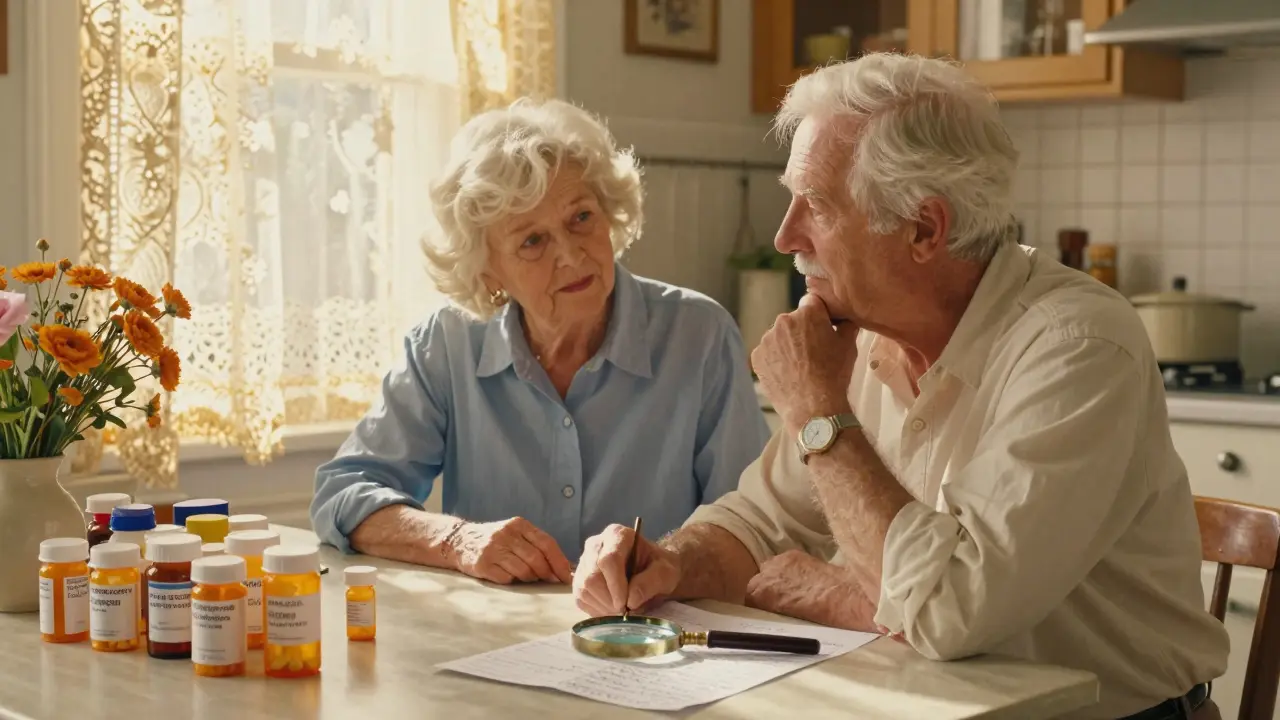
When you’re over 65, taking medication isn’t just about popping a pill-it’s about staying safe. Generic drugs make up nearly 9 out of 10 prescriptions filled by older adults in the U.S., and for good reason: they’re cheaper. But here’s the real question: are they just as safe for seniors as brand-name drugs? The answer isn’t simple. Yes, the FDA says they’re equivalent. But biology doesn’t care about regulations. As your body changes with age, how you process drugs changes too-and that’s where the risks start.
Why Older Adults Are More Sensitive to Medications
Your liver doesn’t work the same at 75 as it did at 45. Your kidneys slow down. Your body holds onto more fat and less water. These aren’t minor tweaks-they’re major shifts in how drugs move through you. A dose that’s perfectly safe for a 50-year-old can be too strong for someone 75 or older. In fact, studies show that by age 75, your body may clear medications up to 30% slower. That means drugs stick around longer, building up to dangerous levels even if you’re taking the same amount you always have. This is especially true for drugs that affect the brain. Benzodiazepines, sleep aids, muscle relaxants like cyclobenzaprine, and even some antihistamines can cause dizziness, confusion, or falls. And falls in older adults? They’re not just accidents-they’re often the start of a downward spiral: broken hips, hospital stays, loss of independence. The American Geriatrics Society’s Beers Criteria, updated in 2023, lists dozens of medications that should be avoided or used with extreme caution in older adults, regardless of whether they’re generic or brand-name.Generic vs. Brand: Is There a Real Difference?
The FDA requires generic drugs to have the same active ingredient, strength, and route of delivery as the brand-name version. They must also be bioequivalent-meaning they get into your bloodstream at nearly the same rate and amount. That sounds solid. But there’s a catch: inactive ingredients can differ. These fillers, dyes, and coatings don’t treat your condition, but they can affect how the drug is absorbed-especially in people with sensitive digestive systems or swallowing issues. For most drugs, this doesn’t matter. But for drugs with a narrow therapeutic index-where the difference between a helpful dose and a toxic one is tiny-it can. Warfarin is the classic example. Even tiny changes in blood levels can lead to dangerous bleeding or clots. Some seniors report instability after switching from brand-name Coumadin to generic warfarin. Studies show generic warfarin is 98.7% equivalent, but perception matters. In one survey, 42% of older adults believed generic warfarin was less safe-even though the science says otherwise. The same concern applies to thyroid medication. Levothyroxine (generic for Synthroid) has been linked to fluctuating TSH levels in some elderly patients after switching. It’s not that the generic is worse-it’s that the body is so finely tuned to this drug that even small changes in absorption can throw things off. That’s why many endocrinologists prefer to keep patients on the same brand or generic version consistently.Polypharmacy: The Silent Killer
Taking five or more medications? You’re not alone. The average Medicare beneficiary fills 48 prescriptions a year-89% of them generic. But here’s the danger: the more drugs you take, the higher your risk of harmful interactions. One study found that people taking two medications have a 13% chance of an adverse reaction. With five, that jumps to 58%. With seven or more? It’s 82%. Some combinations are especially deadly. Mixing opioids with benzodiazepines increases overdose risk by 154%. Adding gabapentinoids like gabapentin or pregabalin to that mix raises the risk of breathing problems by 70%. These aren’t rare events-they’re predictable outcomes of poorly coordinated care. And it’s not just about drug interactions. It’s about duplication. One person might be prescribed an antidepressant by their psychiatrist, a muscle relaxant by their orthopedist, a sleep aid by their primary care doctor, and a painkiller by their chiropractor-all without anyone seeing the full list. That’s how someone ends up on three different drugs that all cause drowsiness. The result? Falls, confusion, hospital visits.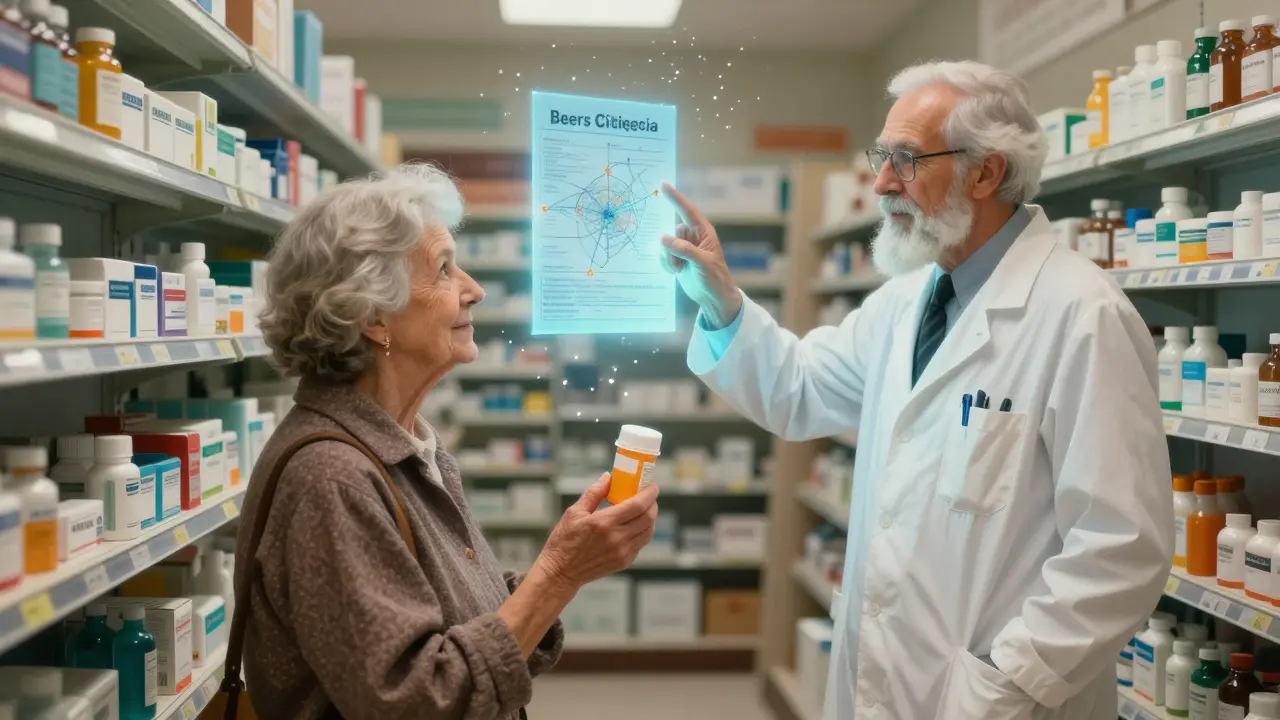
What You Can Do to Stay Safe
You don’t have to give up your meds. You just need to take control. Here’s what actually works:- Keep a live medication list. Write down every pill, patch, inhaler, and supplement-including dosages and why you’re taking them. Update it every time your doctor changes something. Bring it to every appointment.
- Ask for a medication review. Ask your pharmacist to do a full review every three months if you’re on five or more drugs. Studies show this cuts adverse events by 27%.
- Know your high-risk drugs. Check the Beers Criteria list. If you’re on any of these, ask your doctor: Is this still necessary? Can it be replaced with something safer? Is there a non-drug option?
- Use pill organizers. Color-coded weekly dispensers reduce medication errors by 34%. Automated dispensers that lock and alert you when it’s time to take a pill are even better.
- Check labels and expiration dates. 22% of medication errors in seniors come from expired or improperly stored pills. Don’t keep meds in the bathroom-heat and moisture ruin them.
- Ask about generics. If your doctor prescribes a generic, ask: “Is this safe for someone my age?” If you’ve had problems switching, say so. Your doctor can request the brand if needed.
When to Push Back
Not every medication you’re given is necessary. Aspirin for heart protection? It used to be routine for seniors. Now, guidelines say it’s not recommended for most people over 70 unless they’ve already had a heart attack or stroke. The bleeding risk outweighs the benefit. Same with antidepressants. SNRIs like venlafaxine can increase fall risk by 37%. For older adults with balance issues, that’s a dealbreaker. There are safer alternatives. Don’t be afraid to say, “I’m not feeling better, and I’m dizzy all the time. Can we try something else?” And if your doctor says, “It’s just a generic,” remember: the issue isn’t the label-it’s the drug. The same risks apply whether it’s brand or generic. What matters is whether the drug is right for your body, your other conditions, and your lifestyle.
Real Stories, Real Risks
One 82-year-old woman switched from brand-name Synthroid to generic levothyroxine. Her TSH levels went wild. It took three dose changes over six months to get her stable again. Her daughter says, “We thought generics were the same. We didn’t know how sensitive she was.” Another man, 78, was on generic atorvastatin for cholesterol. After his pharmacist explained how the drug works and why the generic was safe, he stuck with it. He saved $1,200 a year-and his LDL stayed perfectly controlled. Then there’s Alice, 88, who took generic Flexeril for back pain. It made her so dizzy she fell twice in one month. Her doctor didn’t realize it was the muscle relaxant-it was never flagged as risky for her age. She stopped it, and her balance improved in days. These aren’t outliers. They’re warnings.The Bigger Picture
The U.S. spends $132 billion a year on generic drugs. Seniors are the biggest users. And yet, we don’t have systems in place to protect them. Most doctors don’t get training in geriatric pharmacology. Pharmacies don’t always flag high-risk combinations. Insurance plans push generics without considering individual risk. The FDA is starting to act. In 2022, they strengthened monitoring for high-risk generics. In 2024, they’re piloting enhanced labeling for drugs most likely to harm older adults. The National Institute on Aging is spending $27 million to study how aging affects drug response. But change won’t come from regulations alone. It comes from asking questions. From speaking up. From refusing to accept “it’s just a pill” as an answer.Final Thought
Generic drugs aren’t the enemy. They’re a tool. And like any tool, they’re only safe when used the right way. For older adults, that means knowing your body, knowing your meds, and never assuming “same drug = same effect.” The goal isn’t to avoid generics-it’s to make sure every drug you take, brand or generic, is truly right for you.Are generic drugs really as safe as brand-name drugs for older adults?
Yes, for most drugs, generic versions are just as safe and effective as brand-name ones. The FDA requires them to have the same active ingredient, strength, and bioequivalence. But for drugs with a narrow therapeutic index-like warfarin or levothyroxine-even tiny differences in absorption can matter. Older adults are more sensitive to these changes due to slower metabolism and kidney function. If you notice new side effects after switching, tell your doctor.
Why are older adults more at risk for side effects from medications?
As you age, your body changes. Your liver and kidneys process drugs more slowly. Your body holds more fat and less water, which affects how drugs are absorbed and distributed. Your brain also becomes more sensitive to drugs that affect the nervous system-like sleep aids, muscle relaxants, and antihistamines. A dose that was fine at 50 can become toxic at 75. This is why "normal" doses often need to be lowered for seniors.
What is the Beers Criteria, and why does it matter?
The Beers Criteria is a list of medications that are potentially inappropriate for older adults, updated every few years by the American Geriatrics Society. It identifies drugs that increase fall risk, cause confusion, or interact dangerously with other conditions common in seniors-like heart failure, kidney disease, or dementia. It doesn’t matter if the drug is generic or brand-name. If it’s on the list, your doctor should reconsider whether you really need it.
How many medications are too many for someone over 65?
There’s no magic number, but risk rises sharply with each added drug. Taking two medications gives you a 13% chance of an adverse reaction. With five, it jumps to 58%. With seven or more, it’s 82%. If you’re on five or more, ask for a medication review with your pharmacist or geriatrician. Many drugs can be stopped, reduced, or replaced with safer alternatives.
What should I do if I think a generic drug isn’t working for me?
Don’t assume it’s "all in your head." If you notice new side effects-dizziness, confusion, fatigue, upset stomach-after switching to a generic, write them down and tell your doctor. Some drugs, like thyroid medication or blood thinners, are very sensitive to small changes in absorption. Your doctor can check your blood levels and decide whether to switch back or adjust the dose. Never stop or change your meds on your own.
Can I save money without risking my safety with generics?
Absolutely. For most medications, generics are safe and effective. Ask your doctor or pharmacist which drugs are safe to switch to generic and which ones you should stay on with the brand. For example, generic statins, blood pressure meds, and most antibiotics are fine. But for drugs like warfarin or levothyroxine, consistency matters. If you’ve been stable on a brand, you may want to stick with it. Savings can still be huge-just be smart about where you switch.




Comments
Hilary Miller
22 January 2026My grandma switched to generic warfarin and started bleeding for no reason. Took three months to fix. Don't let anyone tell you it's 'the same'.
Oren Prettyman
23 January 2026It is not merely a matter of bioequivalence, as the FDA would have us believe; rather, it is a profound misalignment between regulatory abstraction and physiological reality. The pharmacokinetic parameters of generic formulations, while statistically indistinguishable in controlled trials, fail to account for the heterogeneity of geriatric physiology - particularly in the context of polypharmacy, altered protein binding, and diminished hepatic clearance. The assumption of interchangeability is not only scientifically naive but ethically negligent when applied to populations whose metabolic resilience has been irrevocably compromised by time.
Tatiana Bandurina
24 January 2026You say 'the FDA says they're equivalent' - but the FDA doesn't live in a 78-year-old body. They don't wake up with stiff knees, forget which pill they took, or have a liver that takes three days to process a dose that used to take six hours. And yet, the same dosage is prescribed. The system isn't broken - it's designed to ignore you. Your pharmacist doesn't care. Your doctor doesn't have time. Your insurance pushes generics because it's cheaper, not because it's safer. This isn't about science. It's about who gets to be seen.
Philip House
25 January 2026Look, I get it. You want to save money. But you know what’s cheaper than a hospital stay? Not switching your thyroid med. I used to work at a pharmacy. People would switch to generic levothyroxine, come back in six weeks with heart palpitations and anxiety, and blame 'stress'. No. It’s the filler. The damn coating. The batch variation. One guy went from Synthroid to generic and his TSH went from 2.1 to 8.9. He didn’t even know what TSH was. That’s not science. That’s Russian roulette with your metabolism.
Chiraghuddin Qureshi
25 January 2026India makes 40% of the world’s generics 🇮🇳💊. We have strict GMP standards. But I’ve seen my uncle in Delhi switch from brand to generic blood pressure med - same pill, same dose - and his BP went from 120/80 to 150/95. No change in diet. No new illness. Just the generic. So yes - it’s not always about the active ingredient. It’s about the whole package. And seniors? They’re not guinea pigs. 🙏
Sarvesh CK
27 January 2026The philosophical underpinning of pharmaceutical equivalence rests upon a reductionist model that fails to account for the systemic complexity inherent in geriatric pharmacology. The human organism, particularly in advanced age, is not a linear system amenable to standardized dosing protocols. The notion that bioequivalence in plasma concentration equates to clinical equivalence ignores the dynamic interplay of organ reserve, polypharmacological interactions, and neurocognitive sensitivity. To equate chemical identity with therapeutic identity is to commit a category error of the highest order - one that endangers the most vulnerable among us.
Malik Ronquillo
27 January 2026My dad took generic blood pressure pills and nearly died. Now he’s on brand. I don’t care if it costs $100 a month. I care that he’s alive. You wanna save money? Stop buying fancy coffee. Don’t gamble with your mom’s life.
Lana Kabulova
28 January 2026Wait - so you’re saying the FDA’s approval isn’t enough? But they test them! They require bioequivalence! And yet - you’re saying the fillers matter? The dyes? The coating? And that seniors are more sensitive? So… are you saying the FDA is wrong? Or just that their standards are outdated? And why don’t pharmacies warn people? Why don’t doctors ask? Who’s responsible here? I’m confused. This feels like a loophole. A massive, dangerous loophole.
arun mehta
28 January 2026As a pharmacist with over 20 years of experience in geriatric care, I can confirm: generic drugs are not universally interchangeable, especially for patients on narrow-therapeutic-index medications. The variation in dissolution profiles - often within FDA-allowed limits - can produce clinically significant fluctuations in drug concentration in elderly patients with reduced renal clearance. I have personally documented cases where switching from brand to generic levothyroxine resulted in TSH shifts exceeding 30%, requiring dose adjustments. My recommendation: maintain consistency. If a patient is stable on a particular formulation - brand or generic - do not switch. The cost savings are negligible compared to the risk of hospitalization or adverse events.
Patrick Roth
28 January 2026Everyone’s freaking out about generics, but let’s be real - the real problem is that doctors are lazy. They don’t check Beers Criteria. They don’t review meds. They just prescribe. And pharmacies? They just dispense. The generic? It’s just the easiest checkbox. If you want safety, stop blaming the pill and start blaming the system. And yeah - I’m Irish. We know a thing or two about bad healthcare decisions.
Ryan Riesterer
28 January 2026Pharmacokinetic variability in elderly populations is non-linear and highly dependent on CYP450 enzyme activity, which declines by up to 40% after age 70. Generic formulations, while bioequivalent in healthy young adults, may exhibit altered Cmax and Tmax in geriatric cohorts due to reduced gastric motility and altered membrane permeability. The FDA’s 80–125% bioequivalence window is statistically valid but clinically insufficient for drugs with narrow therapeutic indices. The solution is not to abandon generics - it is to implement age-stratified bioequivalence thresholds and mandatory post-marketing pharmacovigilance for geriatric populations.
Jasmine Bryant
28 January 2026i think this is super important but i keep forgetting to ask my doc about my meds. i take 7 pills and i’m 71. i think i might be on something from the beers list but i’m not sure. anyone know how to check? i looked it up once but got lost in the jargon. ty
Liberty C
30 January 2026Let’s be honest - the only reason generics are pushed so hard is because Big Pharma doesn’t want to lose its grip on the elderly cash cow. They make billions off brand-name drugs. So they fund studies that say ‘equivalent.’ They lobby Congress. They pay pharmacists to switch without consent. And then they sit back while grandmas fall, break hips, and die in hospitals because some cheap tablet dissolved too slowly in their 80-year-old stomach. This isn’t medicine. It’s corporate exploitation dressed in white coats.